The Headcount Problem Nobody Talks About
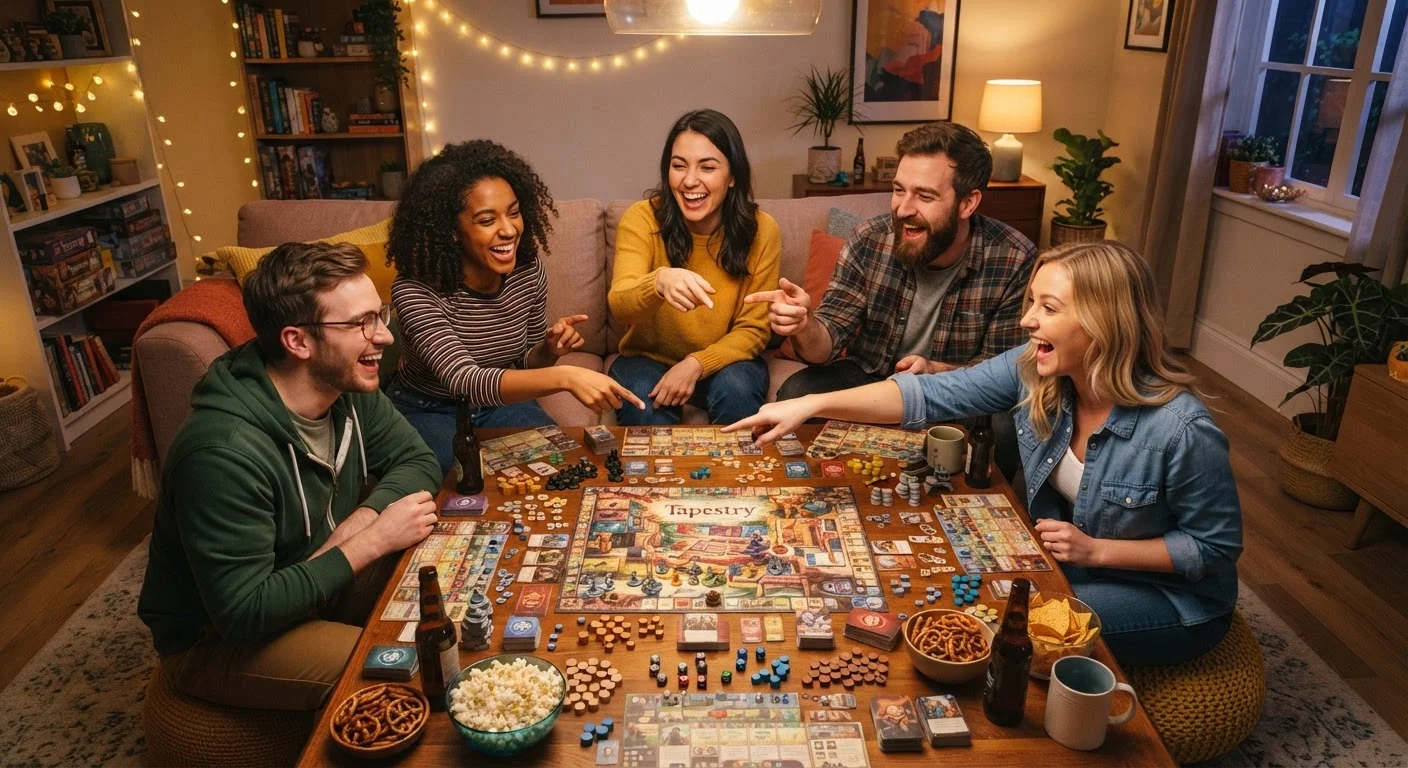
You planned for eight. Twelve showed up. Or maybe it went the other way — a third of your guests bailed and now five people are staring at the box that says "8–16 players." Sound familiar? Variable headcount is one of the most common friction points in casual game nights, and it's rarely addressed until the moment it happens.
The good news: a handful of game formats are designed — or easily adapted — to handle that kind of flexibility. Whether your crowd is intimate or overflowing, the formats below give you a reliable answer to "what do we play?" For more ways to keep any gathering running smoothly, check out the unwritten rules of game night that experienced hosts swear by.
Team-Based Trivia
Trivia is the classic scaling format because teams absorb extra players effortlessly. Have ten people? Make two teams of five. Have fourteen? Three teams with four or five each. The game itself doesn't change — you just redistribute bodies.
The key is keeping teams roughly even in size and mixing knowledge strengths when you can. A team of all sports fans vs. a team of pop culture enthusiasts will produce lopsided rounds. Shuffle the groups so each team has a generalist or two, and the competition stays interesting across every category.
Trivia also requires almost no setup and zero equipment beyond question cards or a free app, which makes it a reliable fallback when you didn't plan ahead.
Trivia teams absorb extra players effortlessly — just redistribute and play.
Prompt-and-Judge Card Games
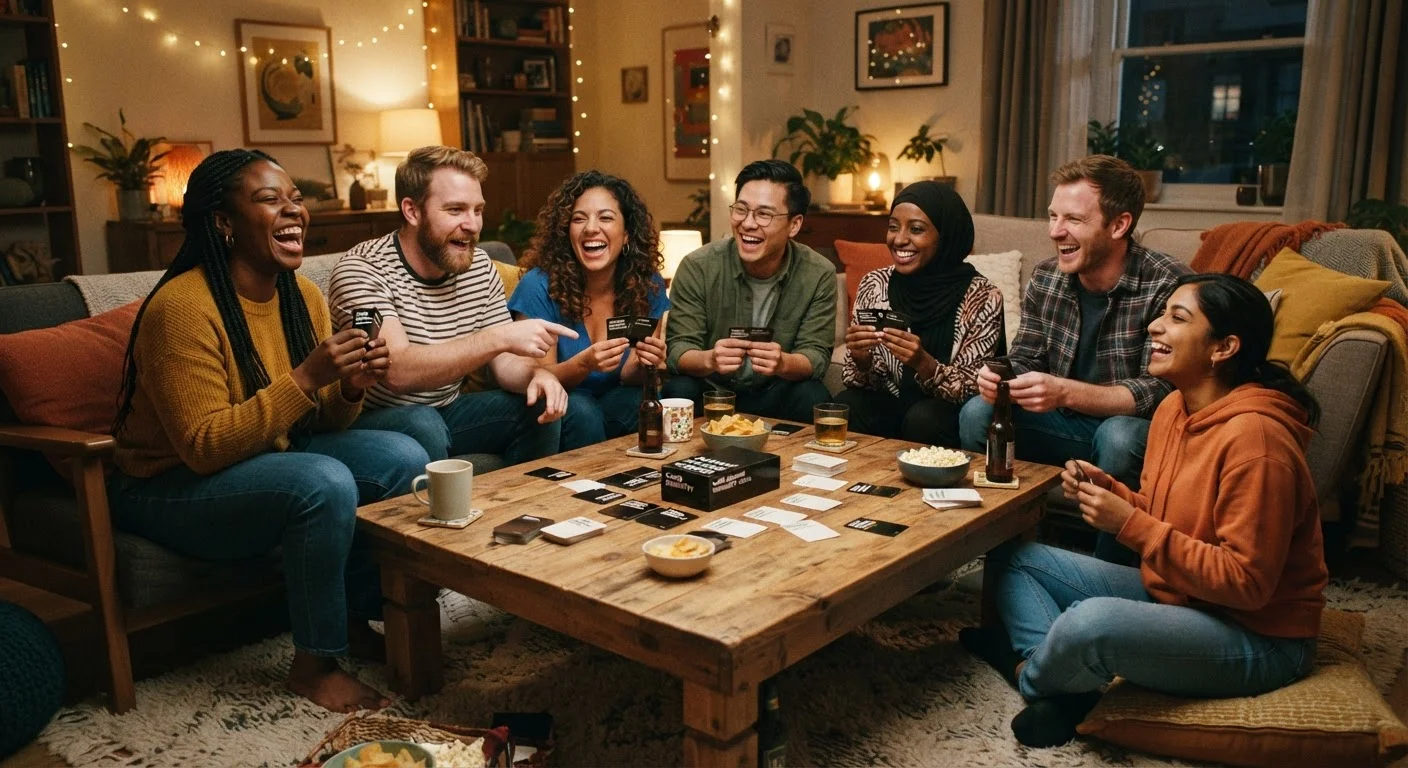
Games built around submitting answers to a prompt — with one rotating judge picking a winner — scale remarkably well because each round is self-contained. More players simply means more submissions per round and a longer rotation of judges, which keeps things fresh rather than repetitive.
The format works well from about 4 players up to 15 or more. At larger counts, rounds do run longer, so consider setting a time limit on judging rather than letting deliberation drag. The humor and surprise in these games actually tends to increase with a bigger crowd, since the range of submitted answers grows wilder.
More players means more wild answers — these games get better as your crowd grows.
Werewolf and Social Deduction Games
Social deduction games — where players argue, bluff, and vote to eliminate hidden "bad guys" — are almost uniquely designed for variable headcounts. Most support anywhere from 6 to 20+ players, and the game's tension actually scales upward with more participants because deception becomes harder to track.
With smaller groups (6–8), rounds move fast and every elimination matters intensely. With larger groups (12+), alliances and misdirection become more elaborate. The same core rules support both experiences. The only real lower limit is having enough players to make the hidden roles meaningful — usually at least six.
Social deduction games thrive on uncertainty — and more players adds more delicious chaos.
Drawing and Guessing Games
Drawing or acting-based guessing games are among the most forgiving formats for fluctuating groups. Teams can be anywhere from 2 to 8 players each, and you can run two simultaneous games if your group is large enough to split cleanly.
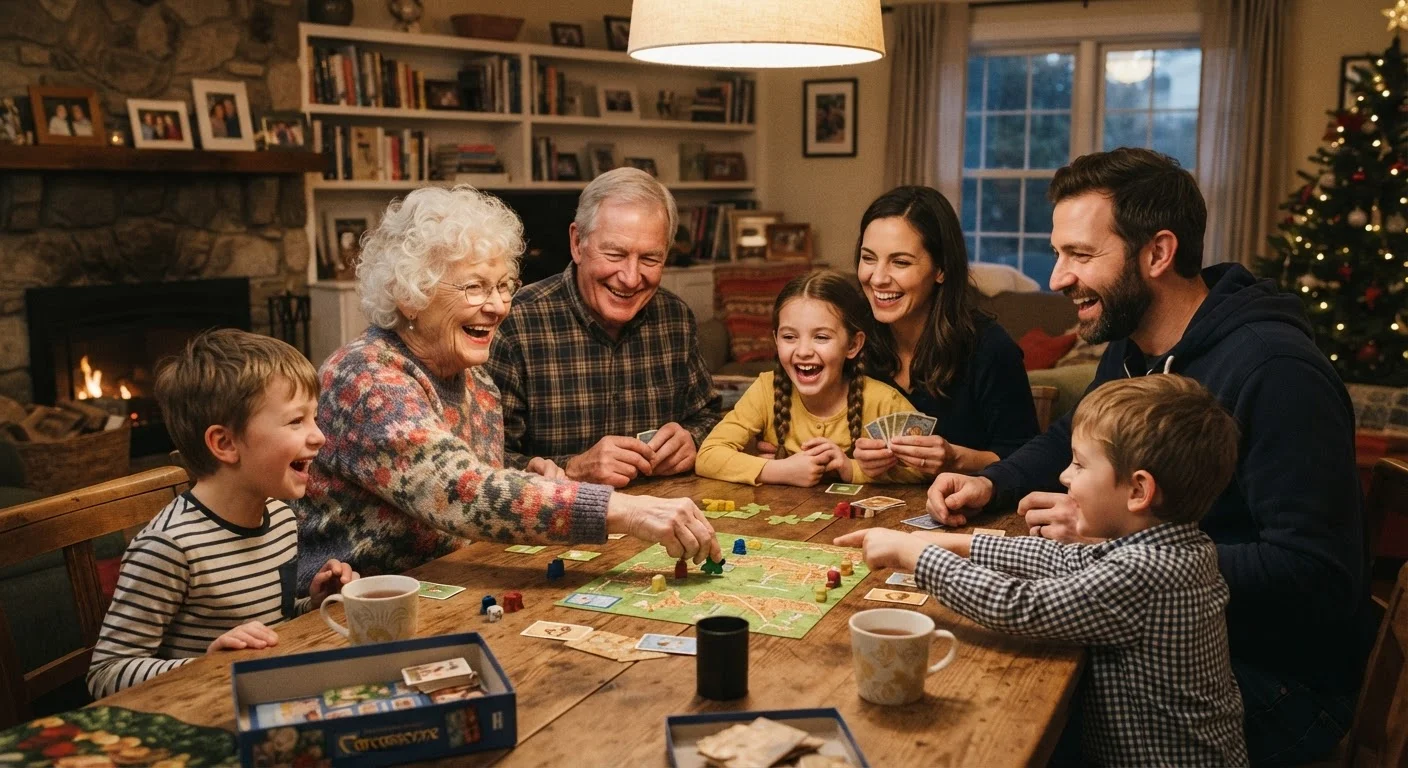
These games benefit from a low barrier to entry — no reading required for the guesser, and artistic ability is irrelevant (bad drawings are often funnier). That accessibility also makes them a strong pick when your group spans different ages or backgrounds. For groups that are already thinking about mixed demographics, strategies for playing with mixed ages pair naturally with this format.
Bad drawings are often the funniest — no talent required, any group size welcome.
Bingo-Style Group Games
Bingo-style formats — where every player has their own card and participates simultaneously — scale to virtually unlimited player counts because there's no turn order to manage. Everyone is engaged at once, which eliminates the "waiting your turn" boredom that plagues games with large sequential play.
The format works especially well at parties where not everyone knows each other, since the low-pressure simultaneous play removes social friction. You can customize bingo cards around a theme (movies, music, holiday traditions) to match your gathering's vibe, which adds a personal touch that generic card games can't replicate.
Every player is active simultaneously — bingo formats never make anyone wait their turn.
Relay or Tournament Bracket Formats
When your group is large and competitive, bracket-style play turns any two-player game into a scalable party event. Pair people off for short head-to-head rounds — whether it's a word game, a dexterity challenge, or a quick trivia duel — and rotate winners through a bracket until you have a champion.
This format works best with games that have fast rounds (under 5 minutes each), so spectators don't lose interest. The bracket structure also creates natural conversation and side commentary among eliminated players, keeping everyone invested even when they're not actively competing. For anyone interested in running this more formally, hosting a home tournament covers exactly how to structure it.
Bracket formats transform any two-player game into a full-group party event.
Storytelling and Improv Games
Collaborative storytelling games — where each player adds to an evolving narrative — handle variable players gracefully because the format is inherently open-ended. More players means more story beats and greater absurdity; fewer players means a tighter, more focused narrative. Either way, the game functions.
These formats tend to reward creativity over competitive instinct, which changes the room's energy in a useful way. Groups that have been playing fast, high-stakes games all night often respond well to a storytelling round as a natural cooldown. No scorekeeper needed, no timer required — just a prompt and a willingness to be silly.
Storytelling games need no scorekeeping — just a prompt and a willingness to be silly.
Building a Flexible Game Night Rotation
No single game does everything, but keeping two or three of these format types on your shelf means you're rarely caught off guard. Pair a free-form creative game with a team trivia option and a fast card game, and you've covered most scenarios from a quiet Saturday with close friends to a packed holiday party.
Keep a "Buffer Game" Ready
Before any gathering, identify one fast, simple game in your collection that works for 4 to 12+ players and takes under 20 minutes to explain. This is your buffer game — the one you pull out when the group is in flux, someone's running late, or you need to bridge between longer activities. Having it mentally pre-selected means less scrambling when the moment arrives.
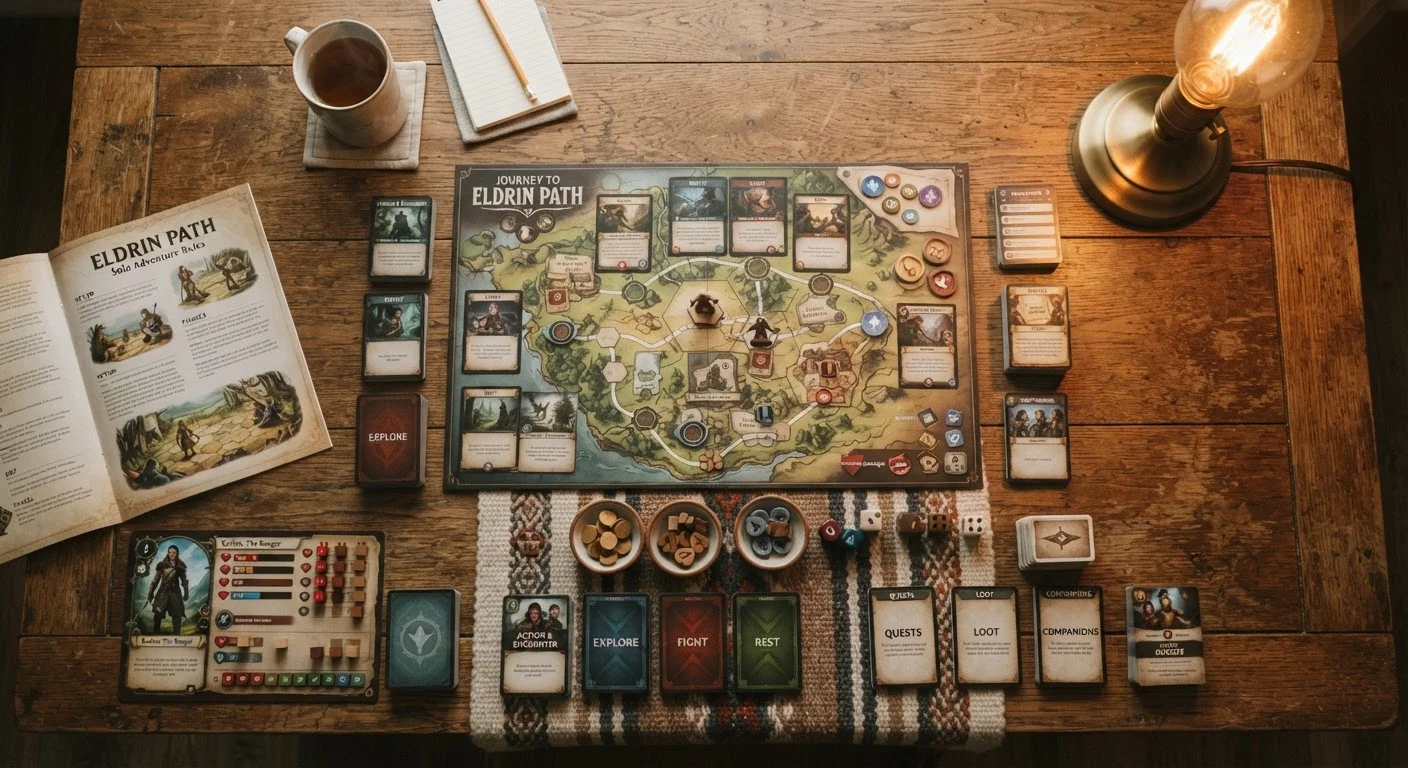
If your group skews wide in age — kids alongside adults — the scaling strategies here work even better when combined with approaches tailored for mixed-age groups. And if you ever find yourself with just one player, the world of solo board gaming is deeper than most people expect.