What Actually Defines Each Hotel Type
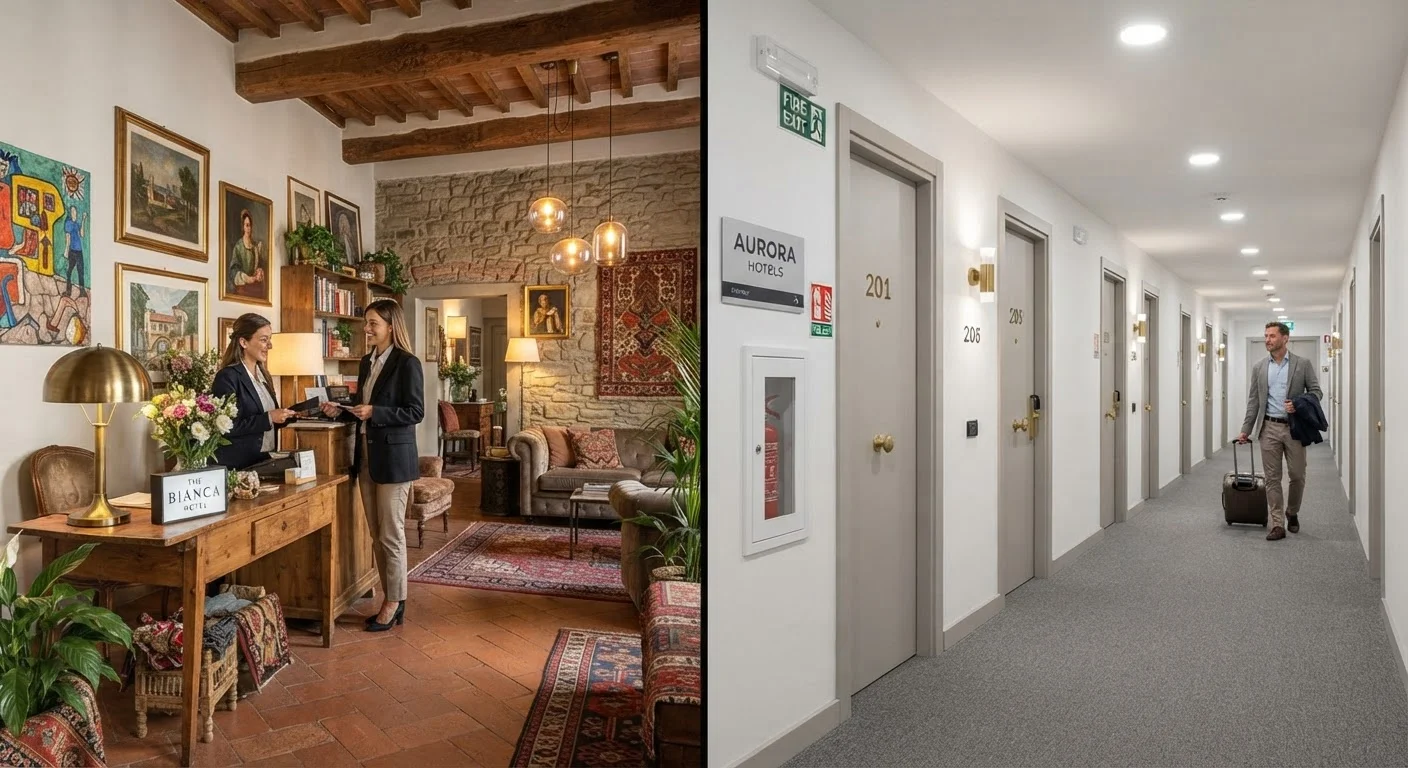
The term boutique hotel generally describes an independently owned or small-group property with fewer than 100 rooms, a distinct design identity, and programming tied to its local setting. Chain hotels—also called branded hotels—operate under a parent company's flag, follow standardized service protocols, and participate in corporate loyalty programs.
The line has blurred in recent years. Some major hospitality groups now operate boutique-style brands (such as soft-brand collections) that retain independent aesthetics while sitting within a larger loyalty ecosystem. When evaluating a property, look past the label and examine ownership structure, room count, and whether the amenities reflect a corporate standard or a locally curated approach.
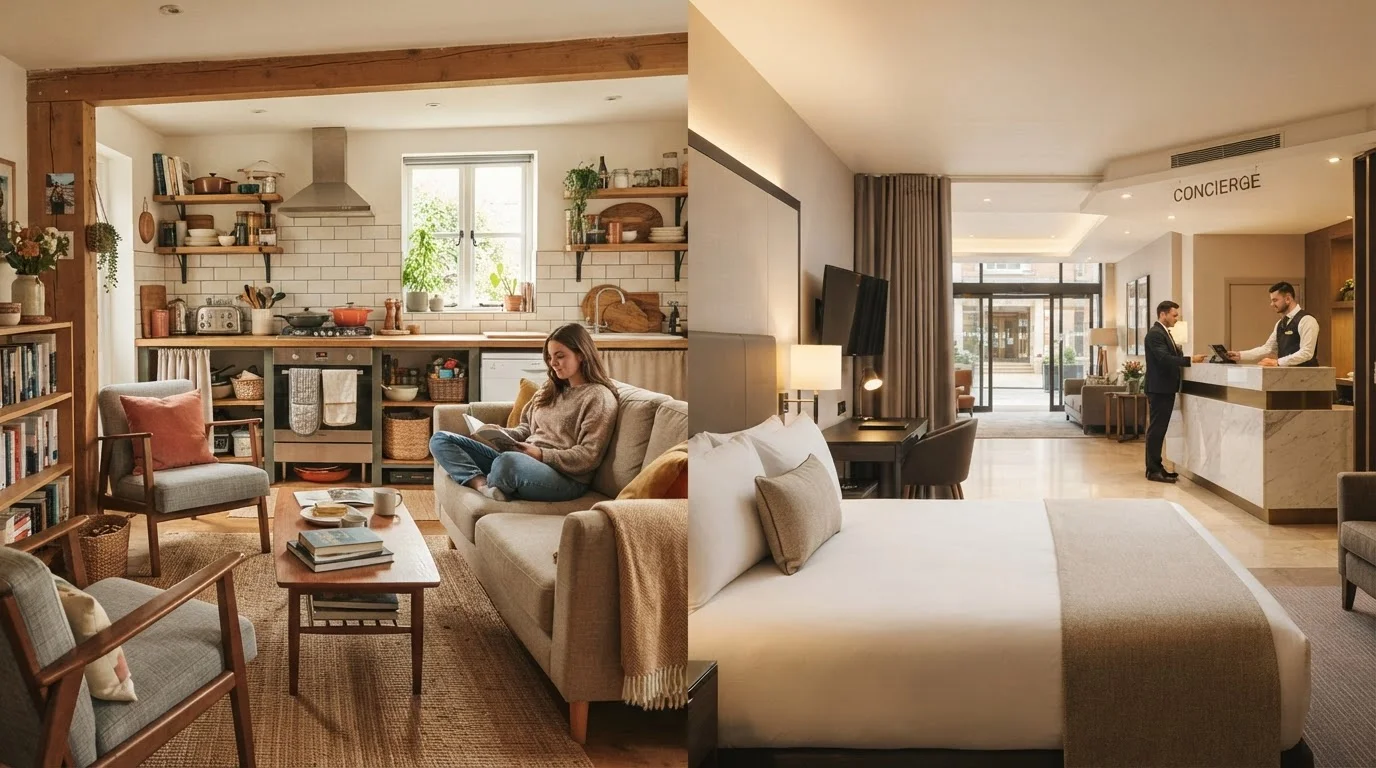
For a broader look at how hotel stays compare to other lodging formats, see our comparison of Airbnb vs. hotel stays.
Where the Differences Actually Show Up
Lobby aesthetics are the most visible difference, but the more consequential gaps appear in areas that affect your day-to-day experience.
Service Approach
Chain hotels follow scripted service standards designed for consistency across thousands of properties. Staff are trained to handle high volume efficiently. Boutique hotels typically employ smaller teams with more latitude to personalize interactions—remembering guest preferences, offering local dining recommendations, or accommodating unusual requests. That said, service quality at boutiques varies more widely because there's no corporate baseline to enforce.
Amenities and Facilities
Large chain hotels typically offer reliable amenities: 24-hour front desks, on-site gyms, business centers, and breakfast programs. Boutique hotels may have fewer facilities but often partner with nearby businesses—local coffee roasters, fitness studios, or curated minibar selections—to create a more place-specific experience. If a specific amenity (pool, gym, room service) is essential for your trip, verify availability directly before booking.
Pricing Patterns
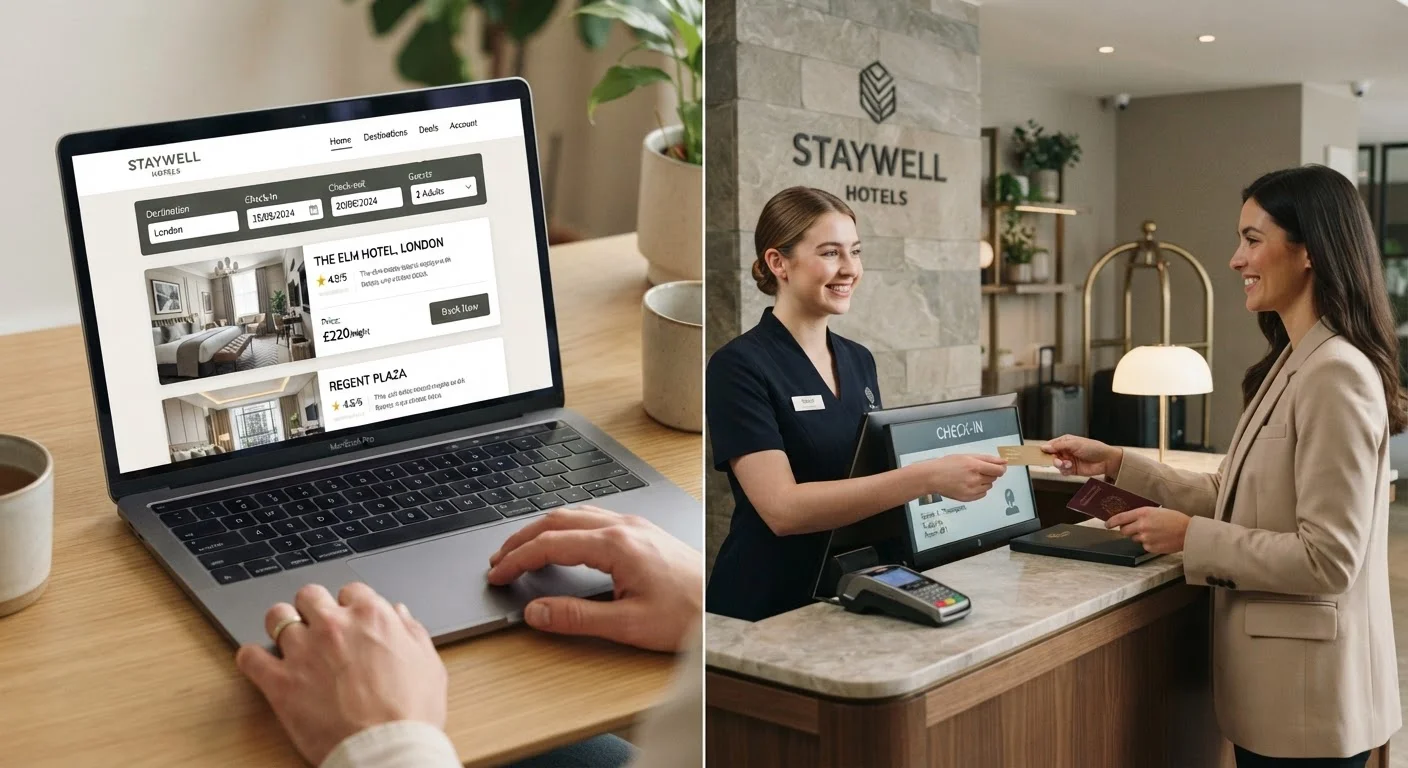
Boutique hotels are not automatically more expensive. In many markets, a well-located boutique property competes directly on price with a mid-range chain. Rates vary significantly by city, season, and demand. Learning how booking direct vs. using a third-party site affects your rate applies equally to both hotel types.
| Boutique Hotels | Chain Hotels | |
|---|---|---|
| Service style | Personalized, locally informed | Standardized, efficient |
| Consistency across properties | Variable — property-specific | High — brand-enforced standards |
| Loyalty program access | Limited or fragmented | Comprehensive, widely redeemable |
| Local character | Strong — reflects destination | Minimal — brand identity dominates |
| Amenity reliability | Varies widely by property | Predictable across locations |
| Typical room count | Under 100 rooms | 100+ rooms, often much larger |
| Price range | Mid to high, competitive in many markets | Budget to luxury across all tiers |
| Best fit | Leisure, exploration, special occasions | Business travel, frequent stays, families |
Loyalty Programs: A Major Practical Difference
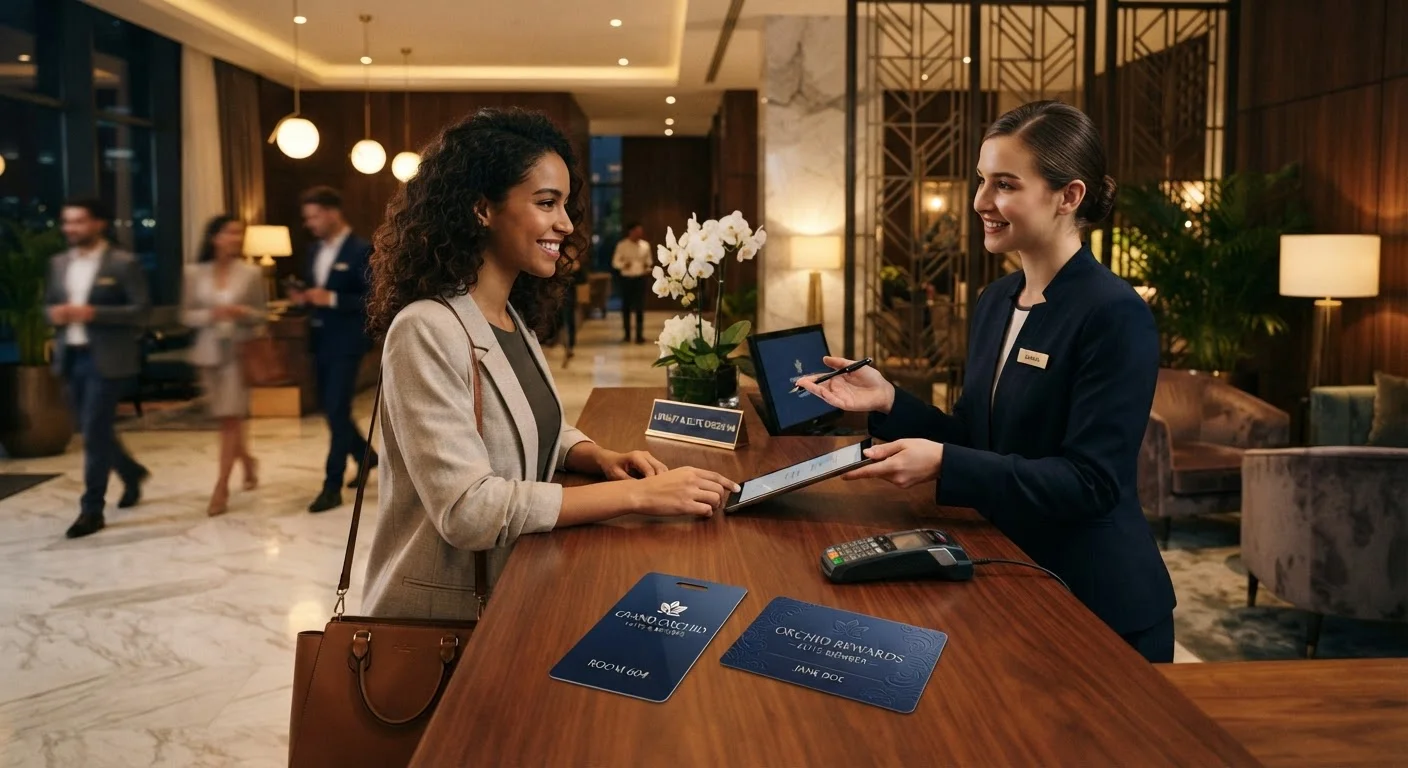
One of the most concrete advantages chain hotels hold is access to established loyalty programs—point accumulation, elite status tiers, complimentary upgrades, and guaranteed room categories. For travelers who stay ten or more nights per year at the same brand family, these programs can deliver meaningful value.
Boutique hotels may participate in smaller independent hotel alliances (such as certain soft-brand collections or affinity networks), but coverage is fragmented and benefits rarely match major chain programs in scale. If loyalty points factor into your travel budget, review our breakdown of hotel loyalty program value before committing to a brand.
How to Choose Based on Your Specific Trip
Rather than picking a hotel type in the abstract, match the choice to what your specific trip requires.
- Business travel or short layovers: Chain hotels typically deliver faster check-in, reliable Wi-Fi infrastructure, and business amenities without surprises.
- Exploring a new city: A well-chosen boutique hotel can serve as a practical orientation tool—staff tend to give more specific local guidance, and the property itself often reflects neighborhood character.
- Family trips: Chains frequently offer roll-away beds, kids' menus, and interconnecting rooms as standard. Boutiques may accommodate families but with less consistency.
- Special occasions: Boutique properties often excel at atmosphere and personalized touches that make a stay feel distinct rather than transactional.
When reading guest reviews for either type, focus on signals that predict your specific needs—not overall scores. Our guide on what hotel reviews actually tell you explains which signals matter most.
If budget is a primary concern, you may also find useful framing in our comparison of hostels, budget hotels, and vacation rentals.