
The Core Trade-Off: Consistency vs. Character
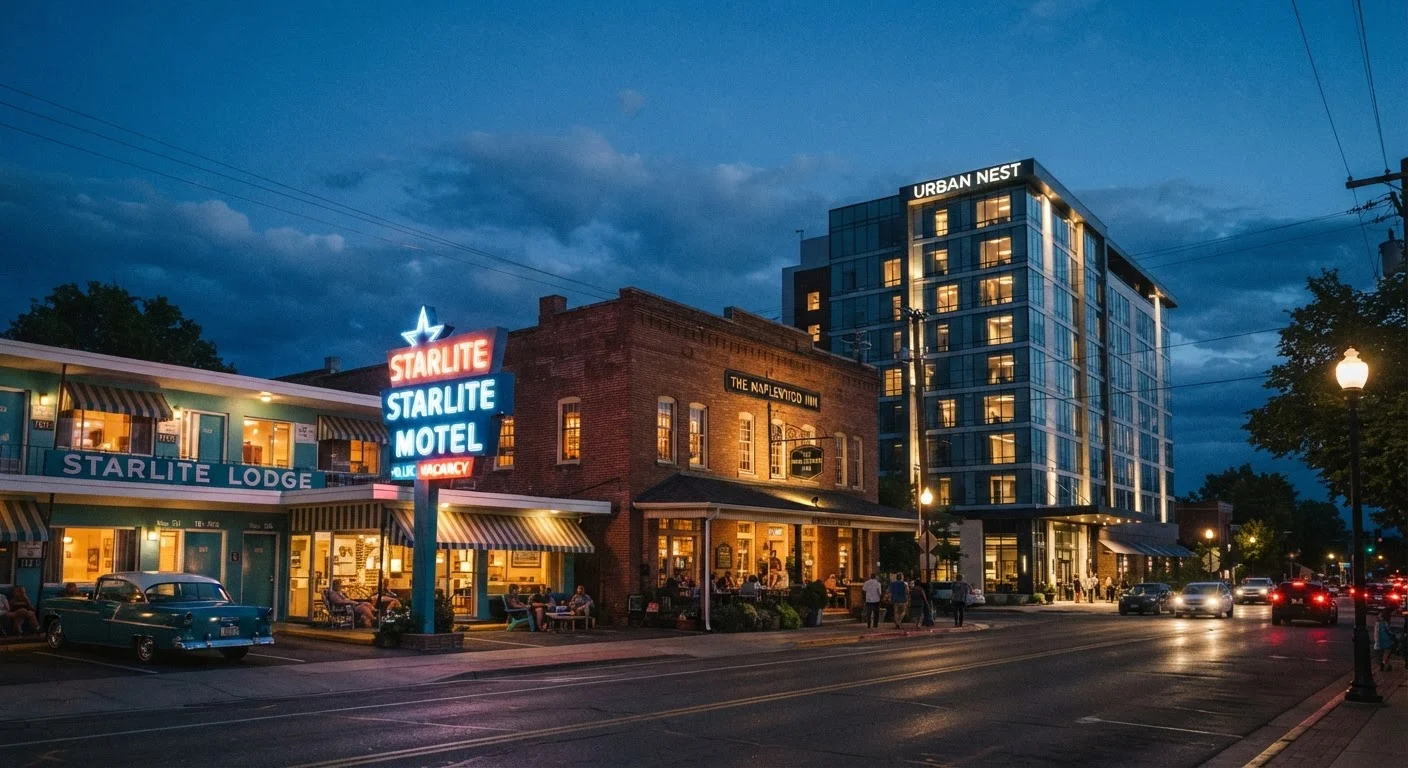
Hotels and short-term rentals aren't competing for the same traveler — they're solving different problems. A hotel is a service product: you pay for reliable cleanliness, daily housekeeping, front-desk support, and a known quantity when you walk through the door. A short-term rental is more like borrowing someone's home: more space, a kitchen, a neighborhood vibe, but variable quality and fewer service guarantees.
The right choice depends less on which option is objectively better and more on what your specific trip actually requires. For a broader overview of lodging categories, it helps to understand where Airbnbs and hotels each sit in the wider accommodation landscape.
| Criterion | Airbnb (Short-Term Rental) | Hotel |
|---|---|---|
| Space | Living room, kitchen, often multiple bedrooms | Single room; suites available at higher cost |
| Nightly cost (solo or couple) | Competitive, but fees inflate short stays | Predictable; resort fees may apply |
| Cleaning & housekeeping | One-time pre-stay clean; no daily service | Daily housekeeping standard |
| Kitchen access | Full kitchen in most listings | Rare; mini-fridge or microwave only |
| Cancellation flexibility | Varies widely by host policy | Often free cancellation on flexible rates |
| Loyalty rewards | Not available | Points programs at major chains |
| Consistency of quality | Variable; depends on individual host | Standardized within brand tier |
| Location options | Residential and rural areas; wider spread | Concentrated in city centers and tourist zones |
Cost: What You Actually Pay After Fees
Sticker prices rarely tell the full story. A short-term rental listed at $120 per night may carry a $90 cleaning fee, a $15 service fee, and local taxes — pushing a two-night stay's true cost well above a comparable hotel room. For longer stays, those fixed fees amortize more favorably, which is why rentals tend to make more financial sense from about five nights onward.
Hotels, meanwhile, bundle most costs into the nightly rate, though resort fees at certain properties — charged separately and sometimes non-negotiable — can add $30–$50 per night. Always check the total at checkout, not just the headline rate. If you're weighing where to book, our comparison of booking direct versus third-party sites can affect your total price and flexibility more than you might expect.
For budget-focused travelers, it's worth knowing that hostels and budget hotels occupy a different price tier altogether and may be worth considering if cost is the primary driver.
Amenities, Space, and the Kitchen Question
One of the clearest advantages short-term rentals hold over hotels is physical space. A typical one-bedroom rental gives you a living room, full kitchen, and often a washer-dryer — amenities a standard hotel room simply doesn't offer. For families or groups traveling together, this translates to real comfort and measurable savings on dining.
Hotels compensate with services rentals can't replicate: daily housekeeping, on-site fitness centers, concierge assistance, luggage storage, and — at higher tiers — pools, spas, and room service. Loyalty programs at major hotel chains also accumulate points across stays, which can mean free nights over time. If you're drawn to properties with more personality than a chain provides, our breakdown of boutique versus chain hotels explores how character and consistency trade off against each other.
~43%
U.S. travelers who chose rentals for longer trips
A Phocuswright study found a significant share of American leisure travelers prefer short-term rentals specifically for stays of five or more nights.
$61
Average Airbnb cleaning fee per booking (U.S.)
NerdWallet's analysis of U.S. Airbnb listings found average cleaning fees can represent a substantial share of the total cost on short stays.
2–3x
More square footage in a typical rental vs. hotel room
Industry estimates suggest a one-bedroom short-term rental commonly offers two to three times the floor space of a standard hotel room.
Reliability, Trust, and What Happens When Things Go Wrong
This is where hotels hold a structural advantage most travelers underestimate. When a hotel room is below standard — dirty, noisy, not as described — the front desk is two minutes away and the property has reputational and contractual obligations to fix it. When a short-term rental has a broken heater or misleading photos, resolution depends on platform support and host responsiveness, which varies widely.
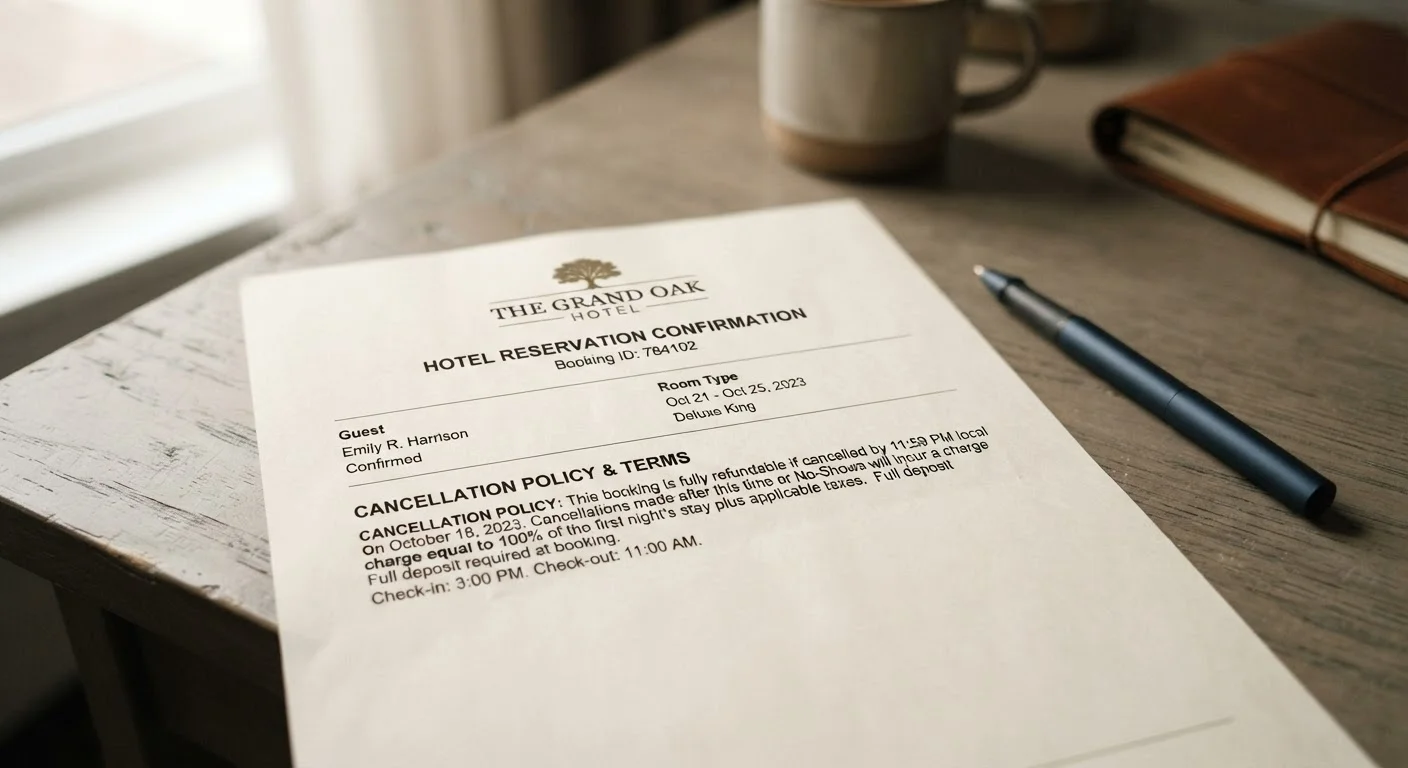
Cancellation terms also differ substantially. Hotels — particularly chains — often offer free cancellation up to 24–48 hours before arrival on flexible rate bookings. Short-term rental cancellation policies range from flexible to strict, and a strict policy can mean losing 50–100% of your payment if plans change. Understanding these terms before you book is essential; our explainer on hotel cancellation policies walks through the key distinctions. For longer-term accommodation comparisons, extended-stay hotels offer another middle-ground option worth reviewing.
Before finalizing any booking, take time to read recent guest reviews critically. Our piece on what hotel reviews actually signal covers which patterns predict a good stay — and which red flags to act on.