
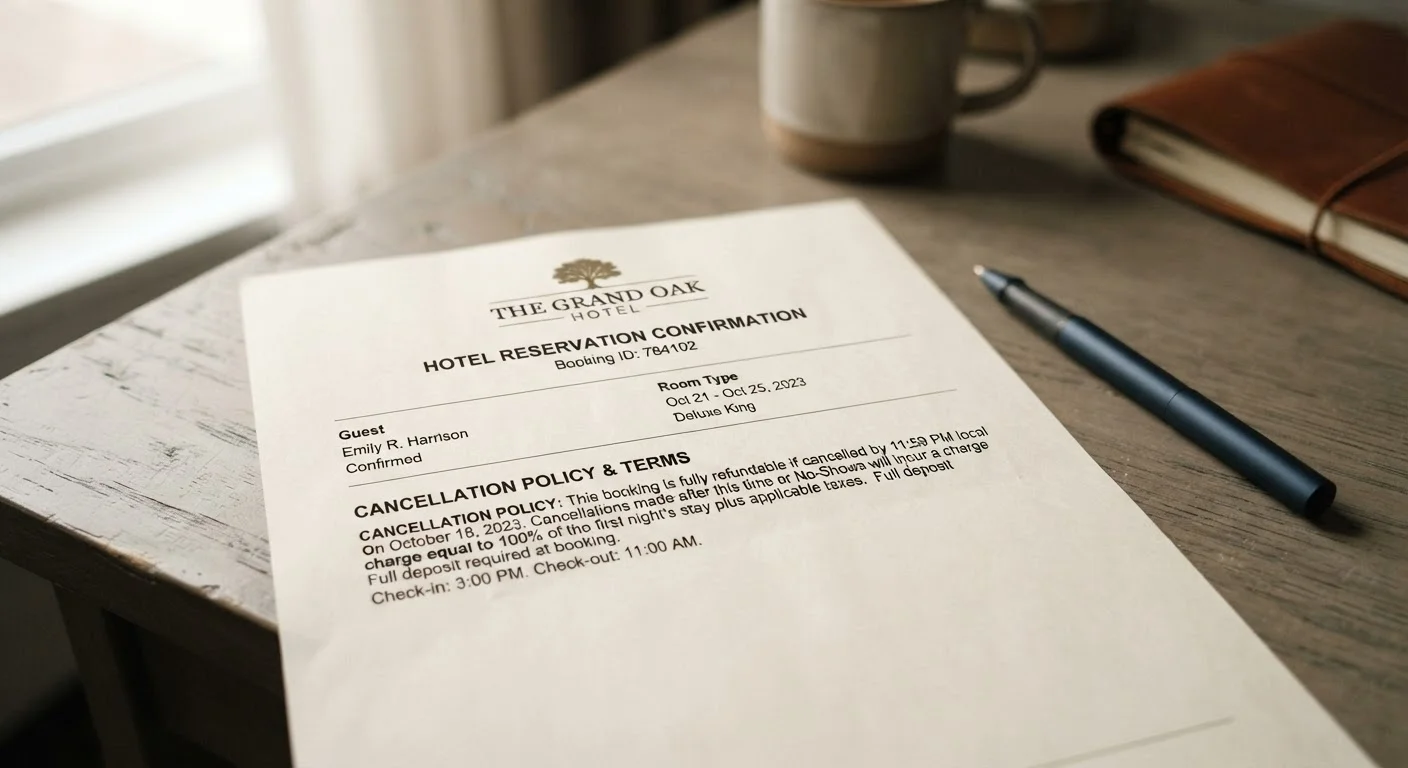
The Three Main Rate Types and What They Mean
Hotel rates generally fall into three categories, each with a different cancellation structure. Knowing which you've booked is the single most important thing you can do before committing.
- Refundable / Flexible rates allow cancellation without penalty up to a defined deadline — commonly 24 to 72 hours before check-in. You pay a higher nightly rate in exchange for that flexibility.
- Non-refundable / Advance-purchase rates are charged in full at the time of booking. If you cancel for any reason, the hotel keeps the payment. These rates typically run 10–25% below flexible pricing, but the savings evaporate the moment your plans change.
- Partially refundable rates sit in between — you may receive a refund minus a processing fee, or only a partial amount depending on how far out you cancel. These are less common but do appear, especially at independent properties.
When comparing rates, understanding how hotel pricing works helps you weigh whether the flexibility premium is worth it given your specific travel timeline.
Refundable Rate
A room rate that allows you to cancel your reservation within a specified window and receive a full refund of any prepaid amounts. These rates are typically priced higher than non-refundable options.
Non-Refundable Rate
A discounted room rate where the full cost is charged at booking and cannot be returned if you cancel or modify the reservation. Sometimes called an 'advance purchase' rate.
Cancellation Deadline
The specific date and time by which you must cancel to avoid a penalty. Most properties state this in local hotel time — not the traveler's home time zone.
No-Show Fee
A charge applied when a guest fails to arrive on the check-in date without canceling. It is usually equal to one night's room rate plus applicable taxes.
Flexible Rate
A rate category that typically allows free cancellation up to 24–48 hours before arrival. Flexibility comes at a higher nightly price compared to advance-purchase fares.
Force Majeure Clause
A policy provision that may waive cancellation penalties in the event of extraordinary circumstances — such as natural disasters or government-mandated travel restrictions — that prevent travel. Coverage and definitions vary widely by property.
How to Read a Cancellation Policy Before You Book
Cancellation terms are legally binding once you complete a booking. Here's what to look for in the fine print:
| Most common free-cancellation window | 24–72 hours before check-in |
| Typical no-show penalty | First night's room rate + taxes |
| Non-refundable discount vs. flexible rate | 10–25% lower on average (Varies by property and season) |
| Cancellation deadline time zone | Hotel's local time zone (not the traveler's) |
| OTA vs. direct booking cancellation terms | May differ — always verify with your booking channel |
Deadline and Time Zone
The cancellation cutoff is almost always expressed in the hotel's local time, not yours. A 11:59 PM deadline at a property in Hawaii is earlier than you might assume if you're booking from the East Coast. Set a phone reminder in the correct time zone as soon as you book.
What 'Free Cancellation' Actually Covers
This phrase means no penalty within the stated window — but it doesn't necessarily mean an instant refund. Refunds on credit cards can take 5–10 business days depending on your card issuer. Some properties issue hotel credits rather than monetary refunds, so confirm the format before assuming cash is coming back.
No-Show vs. Late Cancellation
Failing to show up without canceling is treated differently from canceling after the deadline. A no-show typically triggers the first night's charge regardless of rate type. Some properties extend that penalty to the full reservation for peak-demand periods. Check your confirmation for both scenarios.
OTA Cancellation Terms May Differ From the Hotel's
When you book through a third-party site, the cancellation policy shown may not match what the hotel publishes directly. The OTA's own terms — including processing fees or stricter deadlines — can apply in addition to the hotel's policy. Always read the cancellation section specific to your booking confirmation, and see how your booking channel affects your stay in our guide to booking direct vs. third-party sites.
Situations Where Standard Policies Get Complicated
Several common travel situations interact with cancellation policies in ways that catch travelers off guard.
Multi-Night Reservations With Split Dates
If you shorten a multi-night stay after the cancellation deadline, the hotel may charge for the dropped nights in full, even if you're still checking in as planned. Always call the property directly to discuss modifications — don't assume the same flexibility applies.
Group Bookings and Peak Periods
Holidays, major events, and high-season weekends often carry stricter cancellation windows — sometimes 7 to 30 days out — explicitly stated in a separate addendum to the standard policy. These should appear in your booking terms; look for language like 'special event policy' or 'peak period conditions.'
Third-Party Booking Complications
When you cancel a reservation made through an online travel agency, you typically must cancel through that same channel. Calling the hotel directly will not process your OTA cancellation. The OTA may also impose its own fees on top of the hotel's terms. Review our breakdown of direct vs. third-party booking trade-offs if you're weighing where to book.
Force Majeure and Exceptional Circumstances
Some policies include a force majeure clause covering extraordinary events. However, coverage is narrowly defined, varies by property, and is rarely automatic — you'll generally need to contact the property and provide documentation. Do not assume weather delays or illness qualify without confirming with the hotel directly.
If you're evaluating the full picture of what a hotel reservation actually guarantees, it's also worth reading about what your room confirmation does and doesn't confirm.
This article provides general travel information for educational purposes. Specific cancellation terms vary by property and booking channel. Always verify current policy details with your hotel or booking platform before making a reservation.