
The Engine Behind the Price Tag
When you search for a hotel room and then check again an hour later to find a different price, you haven't stumbled on a glitch — you've witnessed revenue management software at work. Hotels use algorithmic pricing tools that pull in data points like current occupancy, historical booking patterns, competitor rates, and upcoming local events to continuously recalculate what a room should cost at any given moment.
The foundational goal is straightforward: sell every room at the highest price a willing guest will pay, without leaving rooms empty. This is why a Tuesday night in an off-peak month can cost half what a Friday night during a regional conference costs — even at the same property, in the same room category.
Understanding this mechanism matters because it shifts the framing. Prices aren't arbitrary; they reflect the hotel's real-time read of supply and demand. Once you see the logic, you can start working with it rather than against it.
15–25%
Typical OTA commission charged to hotels per booking
Industry estimates from hotel revenue management literature consistently place online travel agency commissions in this range, influencing how hotels price across channels.
3–5x
Rate variation range during peak vs. off-peak periods
Revenue management studies have documented rates for the same room varying by a factor of three to five between high-demand dates and low-occupancy periods at the same property.
70%+
Occupancy threshold that often triggers automatic rate increases
Many hotel revenue management systems are configured to begin raising rates once a property's nightly occupancy forecast crosses approximately 70%, though exact thresholds vary by property.
Why the Same Room Has Multiple Prices at Once
One of the more counterintuitive realities of hotel pricing is that a single room can carry several different prices simultaneously — all of them technically correct. Here's why:
- Distribution channels carry different costs. A hotel pays a commission — often 15–25% — when a booking comes through an online travel agency (OTA). To protect margins, some properties list slightly different rates across channels, or restrict certain discounts to direct bookings only. See how this plays out in practice in our guide on booking direct vs. third-party sites.
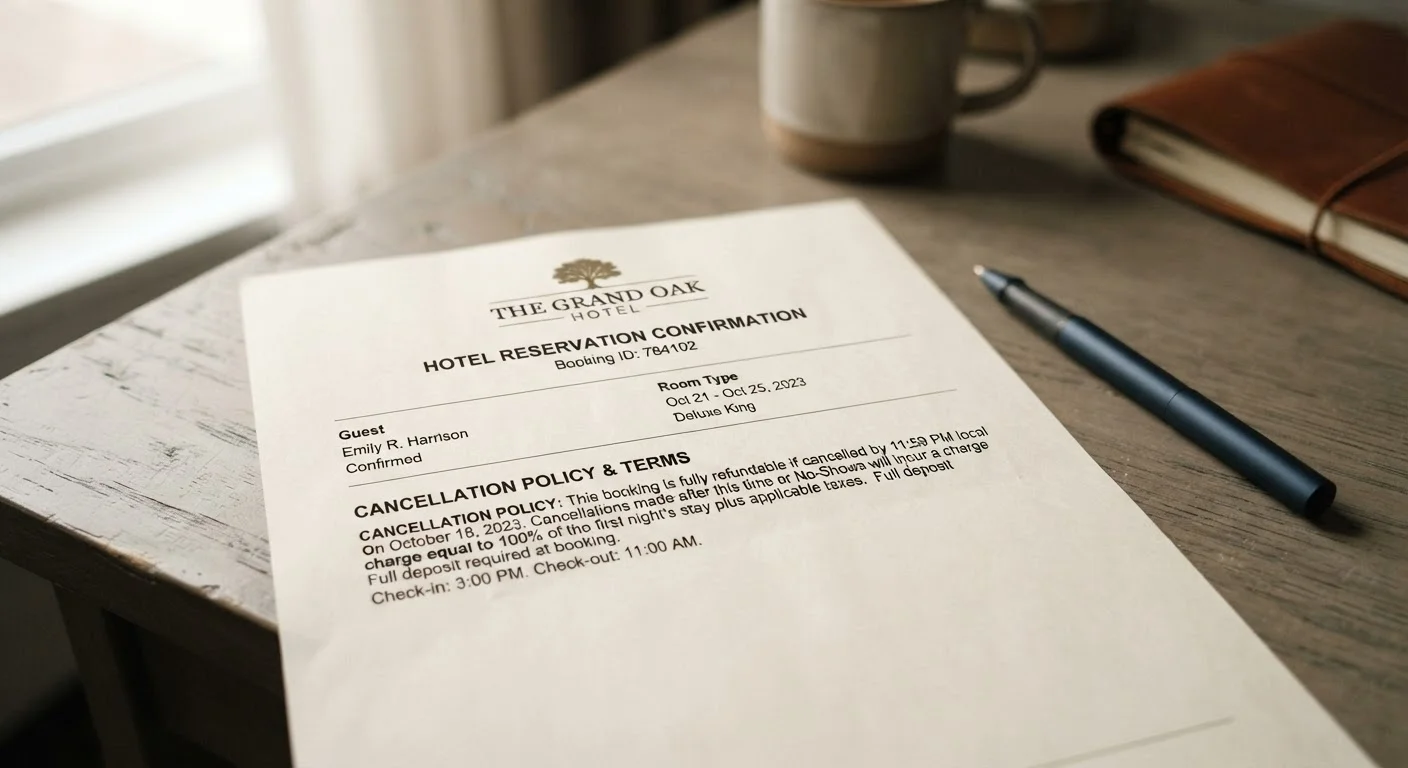
- Rate types differ by cancellation terms. A refundable rate and a non-refundable rate for the same room on the same night are legitimately different products — the hotel prices in the risk of a last-minute cancellation. For a full breakdown, see how hotel cancellation policies work.
- Loyalty and corporate rates run in parallel. Members of a hotel's loyalty program and guests with negotiated corporate contracts may see rates that are invisible to the general public, all for the same physical room.
None of these prices are necessarily a deal or a rip-off in isolation — context determines value.
The Demand Drivers That Move Rates Most
Certain factors push hotel rates higher or lower more reliably than others. Knowing them helps you anticipate price behavior rather than react to it after the fact.
Seasonality and Local Calendar
School calendars, holidays, and regional weather patterns create predictable demand cycles. A beach destination in July commands premiums that the same property can't sustain in November. Large recurring events — annual conventions, marathons, college graduation weekends — are often well-documented and worth researching before you lock in dates.
Occupancy Thresholds
Revenue management systems are programmed to raise rates once occupancy crosses certain thresholds — for example, once 70% of rooms are booked for a given night. This is why waiting can backfire: as other travelers book, the price available to you climbs. The inverse is also true — a hotel with low occupancy approaching check-in may release lower rates to avoid empty rooms.
Competitor Pricing
Hotels monitor neighboring properties' rates continuously. If a competitor nearby raises its price, others in the market often follow. If one drops significantly, it can trigger a short-lived price correction across the area. This herd behavior is one reason rates in a destination sometimes move in clusters.
These same demand mechanics drive airfare fluctuations too — if you want a parallel view, our explainer on what moves the price of an airfare covers the underlying logic.
Practical Implications for Your Search Strategy
Armed with an understanding of how rates are generated, a few habits become more rational:
- Check multiple channels, then verify the hotel's own site. OTA prices include the agency's display, but hotels sometimes offer direct-booking incentives that close the gap or tip the balance. Hidden fees can also differ by channel — our guide on hidden costs that inflate your travel budget covers resort fees and other charges that rarely appear in the headline rate.
- Track rates over time on a specific property. If your dates are flexible, checking the same property across a two- or three-week search window can reveal whether prices are rising, falling, or stable.
- Understand what your rate actually confirms. A lower rate often comes with trade-offs beyond cancellation terms. Our piece on what your room confirmation actually guarantees explains why even a paid booking may not secure the specific room you expected.
- Research the local calendar for your destination. A quick search for conferences, festivals, or sporting events in your target city during your travel window can explain a puzzling price spike — or flag dates to avoid.
Hotel pricing systems are designed to extract maximum revenue, not to reward loyalty to any particular search habit. Approaching your search with that in mind — and verifying across channels — gives you the clearest picture of what a fair market rate looks like for your specific trip.