
Why the Overall Score Tells You Less Than You Think
Most travelers glance at a hotel's aggregate star rating and treat it as the verdict. In practice, that number is a blunt instrument. A hotel with a 4.1 average may have earned that score from guests who stayed two years ago, before new ownership, a renovation, or a staffing overhaul. A hotel sitting at 3.7 may have resolved the issues that dragged it down and now delivers a solid experience.
The overall score also flattens out what matters to you specifically. A property can score well on ambiance and location while consistently underperforming on cleanliness or Wi-Fi reliability. Unless you dig into the sub-ratings and read recent written reviews, the aggregate hides as much as it reveals.
For a broader look at how hotel classifications can mislead, see our guide to what hotel star ratings actually mean.
The Signals Most Travelers Skip
Here are the review elements worth slowing down for:
One often-missed resource: guest-uploaded photos. Unlike the hotel's curated gallery, these show real room conditions, actual bed sizes, and honest bathroom dimensions. Prioritize photos tagged to the specific room type you're booking, not the premium suite used for marketing.
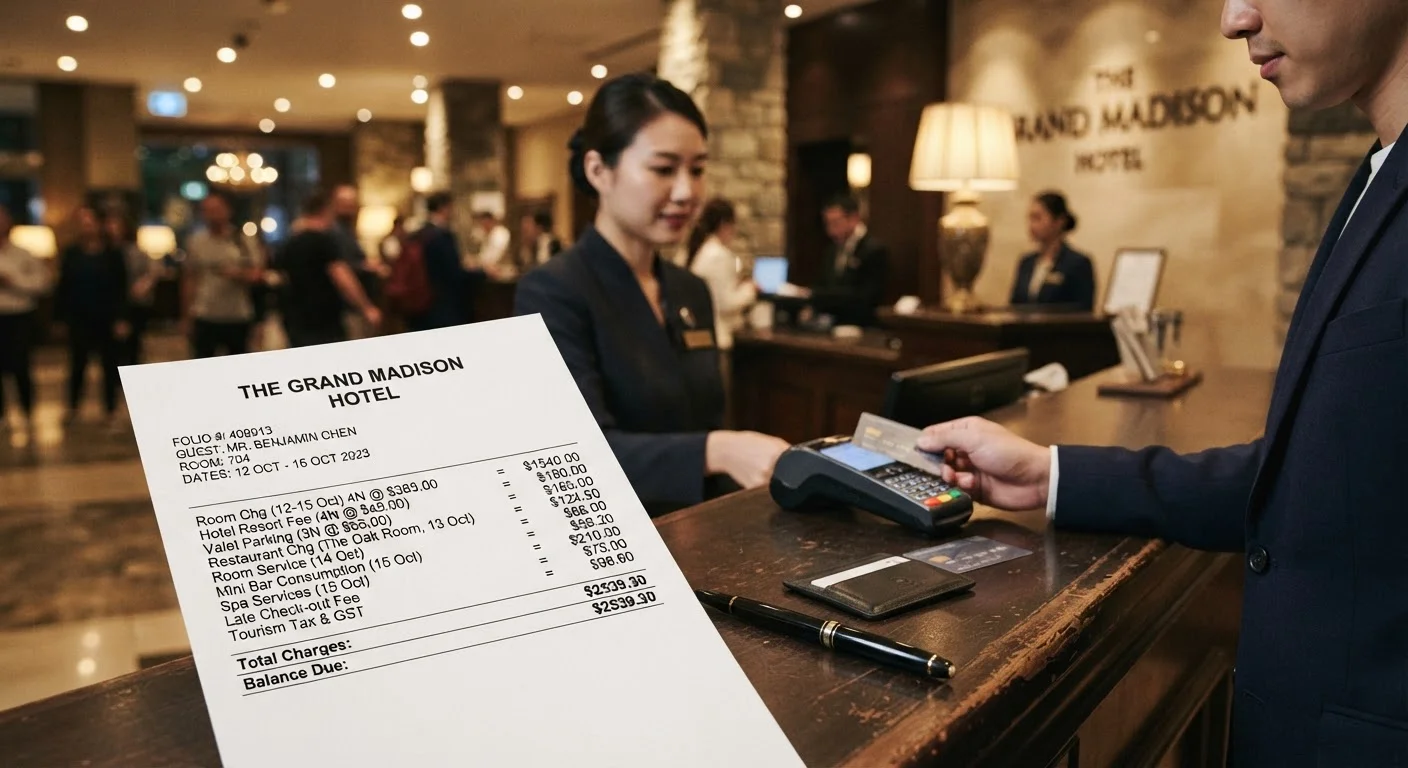
It's also worth cross-referencing reviews against the fees you'll actually pay. Our article on resort fees and hidden hotel charges explains how extra nightly costs can change the value equation entirely, even for a well-reviewed property.
Reading Management Responses as a Proxy for Service Quality
A hotel's reply to a negative review is one of the most underused signals available. Generic, defensive, or copy-paste responses suggest the property treats reviews as a reputation management task rather than genuine feedback. Specific, empathetic responses that acknowledge the actual complaint — and describe a concrete fix — point to a service culture that takes accountability seriously.
Look for responses that name the issue, not just apologize for the guest's disappointment. A manager who writes "We've retrained front-desk staff on early check-in communication" is telling you more about operational culture than any five-star review can.
Check Management Responses on Negative Reviews
Before booking, search specifically for one- and two-star reviews and read how the hotel responded. A thoughtful, specific response signals that management pays attention and takes action. Silence or boilerplate apologies suggest the opposite. This takes two minutes and can tell you more about service quality than the rating score alone.
This matters especially for first-time hotel bookers. Our First-Time Hotel Booker's Handbook walks through how to evaluate properties end-to-end before you commit.
Matching Reviews to Your Traveler Profile
A review from a couple celebrating an anniversary carries different weight than one from a family of four or a solo traveler on a work trip. Many platforms let you filter by traveler type — use that filter. If you're traveling with kids, find reviews from other families. If noise sensitivity is important to you, look specifically for complaints about thin walls, street noise, or loud HVAC systems among guests who mentioned light sleeping.
Similarly, pay attention to what reviewers emphasize versus what they ignore. A reviewer who praises the rooftop bar but says nothing about the room may simply not prioritize what you do. Weight reviews from guests whose trip purpose matches yours.
Understanding what your room booking actually guarantees is equally important — our piece on why your room confirmation doesn't guarantee your chosen room explains a common source of disappointment that reviews rarely flag in advance.
Finally, fold what you learn from reviews into your full trip budget. Hidden costs rarely show up in review scores. See our guide to overlooked travel costs to make sure nothing surprises you at checkout.