What the Signal Path Actually Looks Like
Audio quality begins with how the signal travels from source to speaker. In a wired system, an electrical signal moves through a cable — typically oxygen-free copper wire — directly into the speaker's amplifier or driver. The signal is analog at the speaker end, and nothing needs to interpret or reconstruct it mid-journey.
Wireless systems work differently depending on the protocol. Bluetooth compresses audio data before transmitting it, then decompresses it at the speaker. Wi-Fi-based systems like those using AirPlay or proprietary mesh protocols can transmit higher-quality, lossless audio, but still depend on packet-based digital transmission over a shared radio band. That distinction matters: Bluetooth's compression (even with modern codecs like aptX HD or LDAC) introduces some data loss, while Wi-Fi transmission preserves more of the original signal — though it introduces its own complexity.
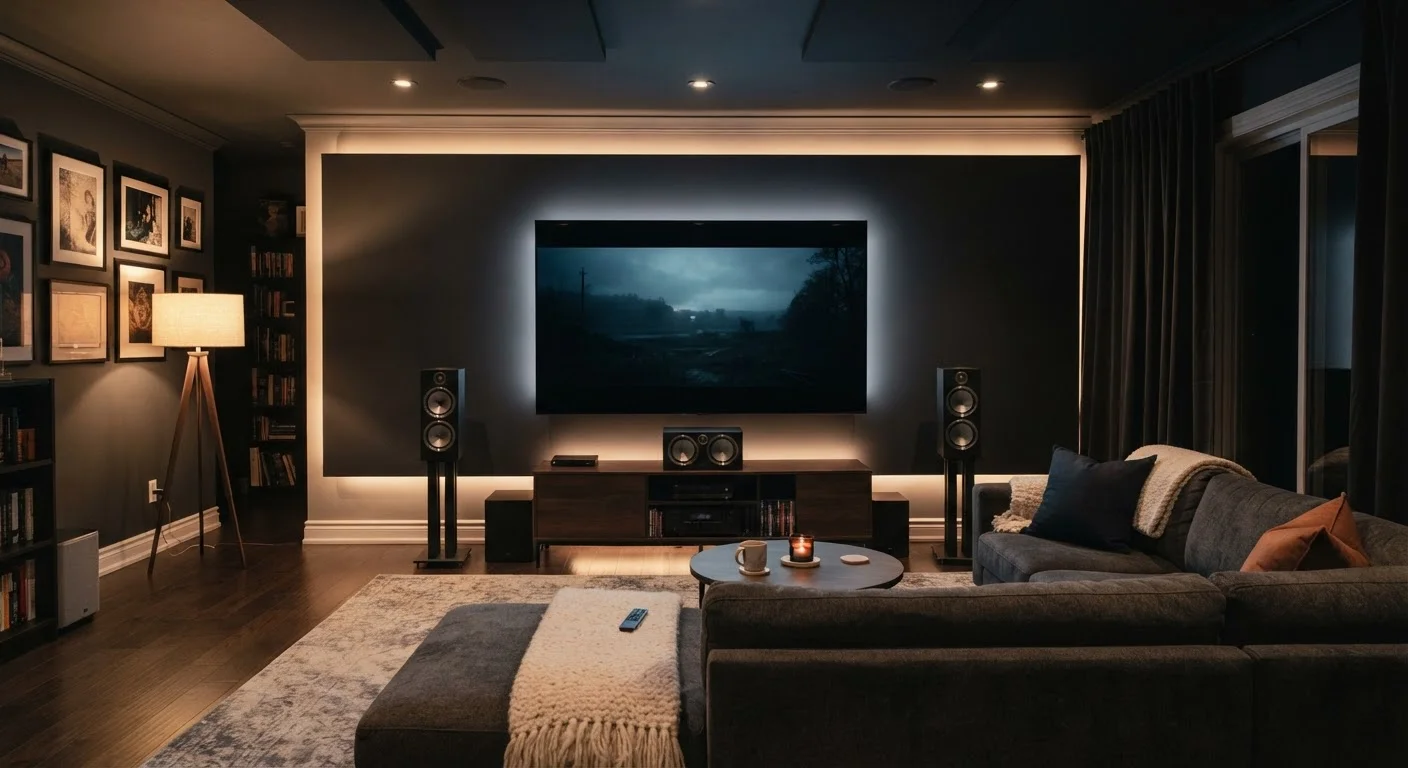
If you're planning a more immersive setup, understanding how speakers interact with room dimensions connects directly to these signal decisions. See our home theater planning guide for factors to work through before choosing any equipment.
Where Wired Systems Have a Real Edge
No compression — signal arrives intact
Wired connections carry an uncompressed electrical signal directly to the speaker driver, preserving the full dynamic range of the source recording without codec-induced data loss.
Near-zero latency for video sync
Wired audio reaches the speaker in milliseconds, eliminating the lip-sync delays that Bluetooth introduces and making wired systems preferable for home theater and gaming.
No dependency on network or software
A passive wired speaker works regardless of router uptime, app availability, or manufacturer support cycles — making it a more reliable long-term investment.
Consistent performance in dense wireless environments
Apartments or neighborhoods with many competing Wi-Fi and Bluetooth signals can cause dropouts in wireless audio; wired connections are entirely immune to this interference.
The practical advantage of a wired connection is determinism: the signal arrives when expected, at the quality it left the source. For home theater use, this matters significantly. Lip-sync errors — where audio arrives slightly after the video frame — are caused by latency in the audio chain. Wired connections have near-zero latency. Bluetooth connections typically introduce 100–200 milliseconds of delay, which can be perceptible during dialogue-heavy video.
Wired systems also don't compete for bandwidth with other household devices. A home network carrying streaming video, smart home sensors, and wireless speakers simultaneously can introduce dropouts or buffering artifacts. This is explored in more depth in our article on why smart home devices lose connectivity.
Where Wireless Systems Are the Practical Choice
Cable routing is complex in existing spaces
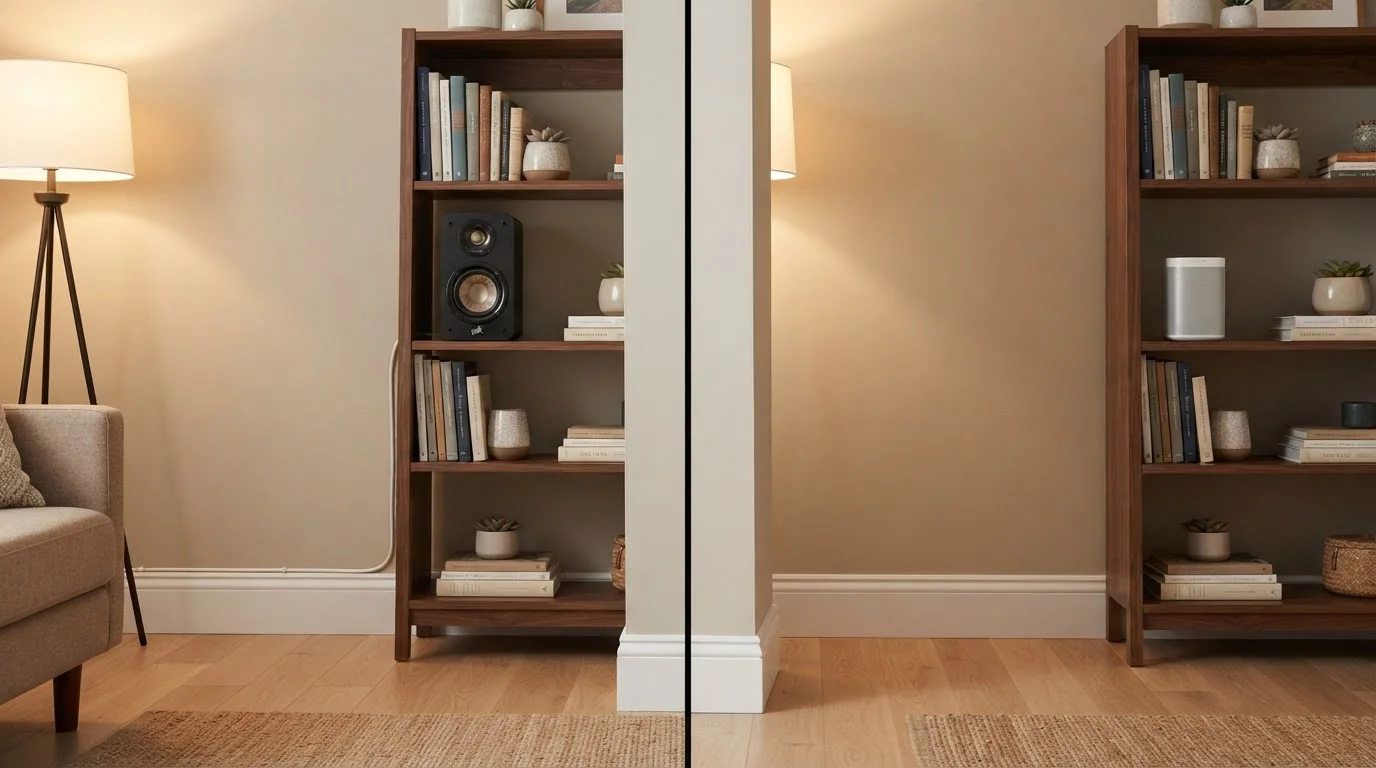
Running speaker wire through finished walls or across concrete floors requires either visible cable management solutions or significant renovation work, which is impractical in many homes.
Bluetooth compression affects audio quality
Even modern Bluetooth codecs like aptX HD or LDAC involve some level of data compression, which can affect the reproduction of high-resolution audio sources, particularly at higher volumes.
Wireless ecosystems can become obsolete
Speakers that rely on proprietary apps or cloud services may lose functionality if the manufacturer discontinues software support — a risk not shared by passive wired speakers.
Network congestion causes intermittent dropouts
Wi-Fi and Bluetooth both share crowded radio frequency bands with other household devices, and heavy network traffic can introduce buffering artifacts or disconnections in wireless audio playback.
Wireless speakers have closed the audio quality gap considerably over the past decade. For casual listening — background music, podcasts, general entertainment — most listeners cannot distinguish a high-quality Bluetooth or Wi-Fi stream from a wired connection in a controlled double-blind test. The perceptible difference is most pronounced in high-resolution audio sources played through high-sensitivity speakers, not in typical household setups.
Placement flexibility is a genuine technical benefit, not just a lifestyle one. Running speaker wire through walls or under flooring in an existing home requires either visible cable management or significant renovation. In a rental or in rooms with concrete subfloors, wireless isn't just convenient — it's often the only realistic option.
Wi-Fi Audio Is Not the Same as Bluetooth
Many wireless speakers marketed under terms like 'multi-room audio' or 'streaming speakers' use Wi-Fi rather than Bluetooth, which allows for higher-bitrate, sometimes lossless transmission. If audio quality is a priority but cable installation isn't feasible, Wi-Fi-based wireless systems represent a meaningful middle ground. The trade-off is greater dependence on network stability and a more complex setup process compared to Bluetooth pairing.
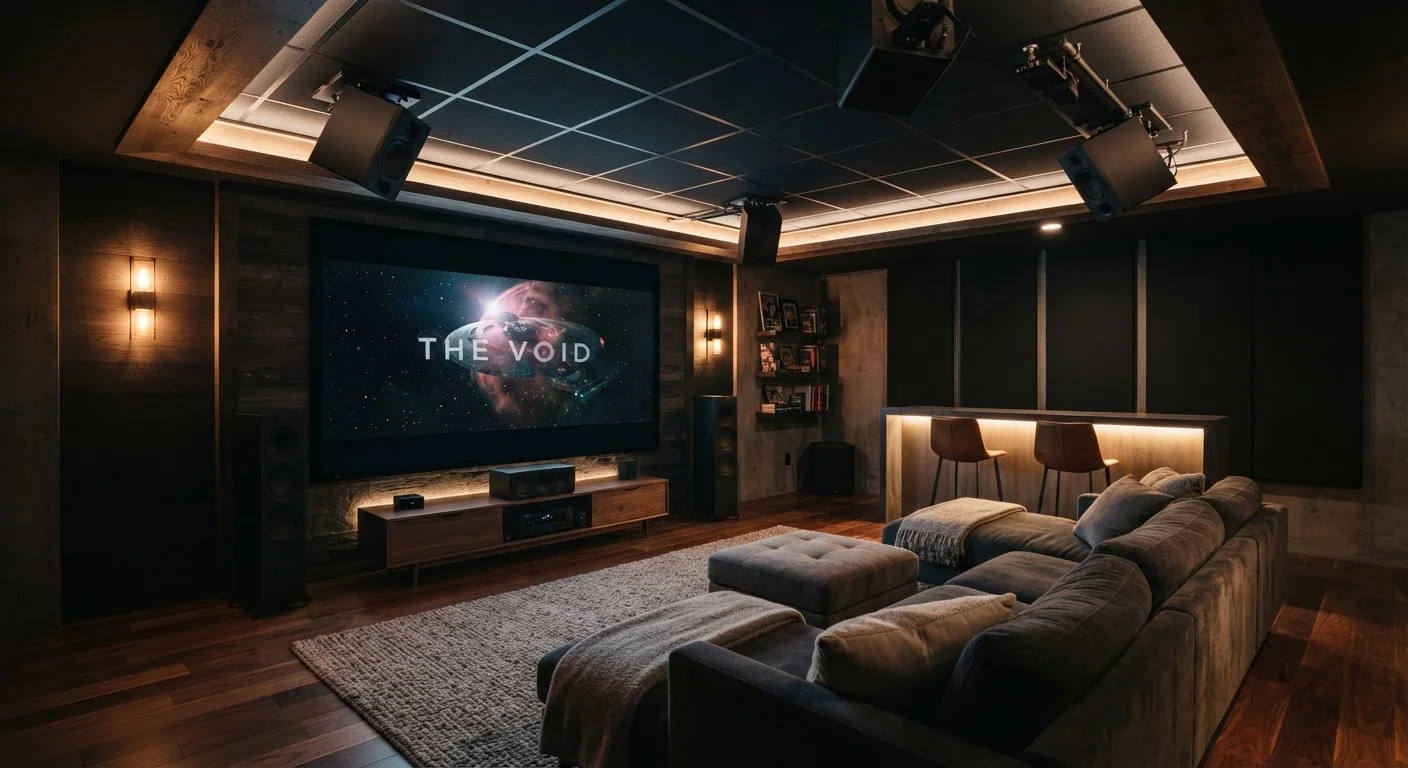
For formats like Dolby Atmos that require overhead or height channels, cable routing becomes especially complex. Understanding how those audio dimensions work can inform whether a wired or wireless approach makes more sense for your room layout. Our explainer on Dolby Atmos vs. surround sound walks through how each system places audio in a space.
Installation, Longevity, and Hidden Costs
Wired systems require upfront planning but tend to be more durable over time. Speaker wire doesn't need firmware updates, doesn't become incompatible when a manufacturer changes its app, and doesn't stop working if your router goes offline. Wireless ecosystems, by contrast, can become orphaned — a speaker that depends on a discontinued cloud service or app may lose core functionality even if the hardware is physically intact.
Wireless systems carry ongoing power requirements that wired passive speakers don't: each wireless speaker contains its own amplifier and often a Wi-Fi or Bluetooth radio, all drawing power continuously. This also means more heat generation and, in battery-powered models, eventual battery degradation.
On cost, wired setups often shift expense from the speakers themselves to installation labor or accessories (in-wall wire, banana plugs, wall plates). Wireless systems consolidate cost into the speaker unit but may include subscription tiers for premium features. Neither approach is inherently cheaper — it depends heavily on the scale and complexity of the installation.
100–200ms
Typical Bluetooth audio latency range
Audio engineering references consistently place standard Bluetooth latency in this range, which is above the roughly 40ms threshold at which some listeners perceive lip-sync errors during video.
~320 kbps
Peak Bluetooth codec bitrate (aptX HD)
For comparison, lossless CD-quality audio requires approximately 1,411 kbps, meaning even advanced Bluetooth codecs operate at a fraction of uncompressed audio's data rate.