Why Board Game Jargon Matters
Walk into any game store or peek at a BoardGameGeek listing and you'll encounter phrases like "area control," "variable player powers," and "take-that mechanic" thrown around as if everyone already knows what they mean. For newcomers, this vocabulary can feel like a barrier. For returning hobbyists, a solid grasp of the terminology makes it much easier to find games you'll actually enjoy.
This glossary cuts through the jargon with plain, practical definitions. Whether you're hunting for your first gateway game or expanding a serious collection, bookmark this page for quick reference. And if you're specifically curious about one of the hobby's most beloved mechanics, our plain-English introduction to deck-building games goes deeper on that subject.
Mechanic
The specific rule-system or procedure that drives player decisions in a game — such as dice rolling, card drafting, or auction bidding. Mechanics are distinct from theme.
Euro-game
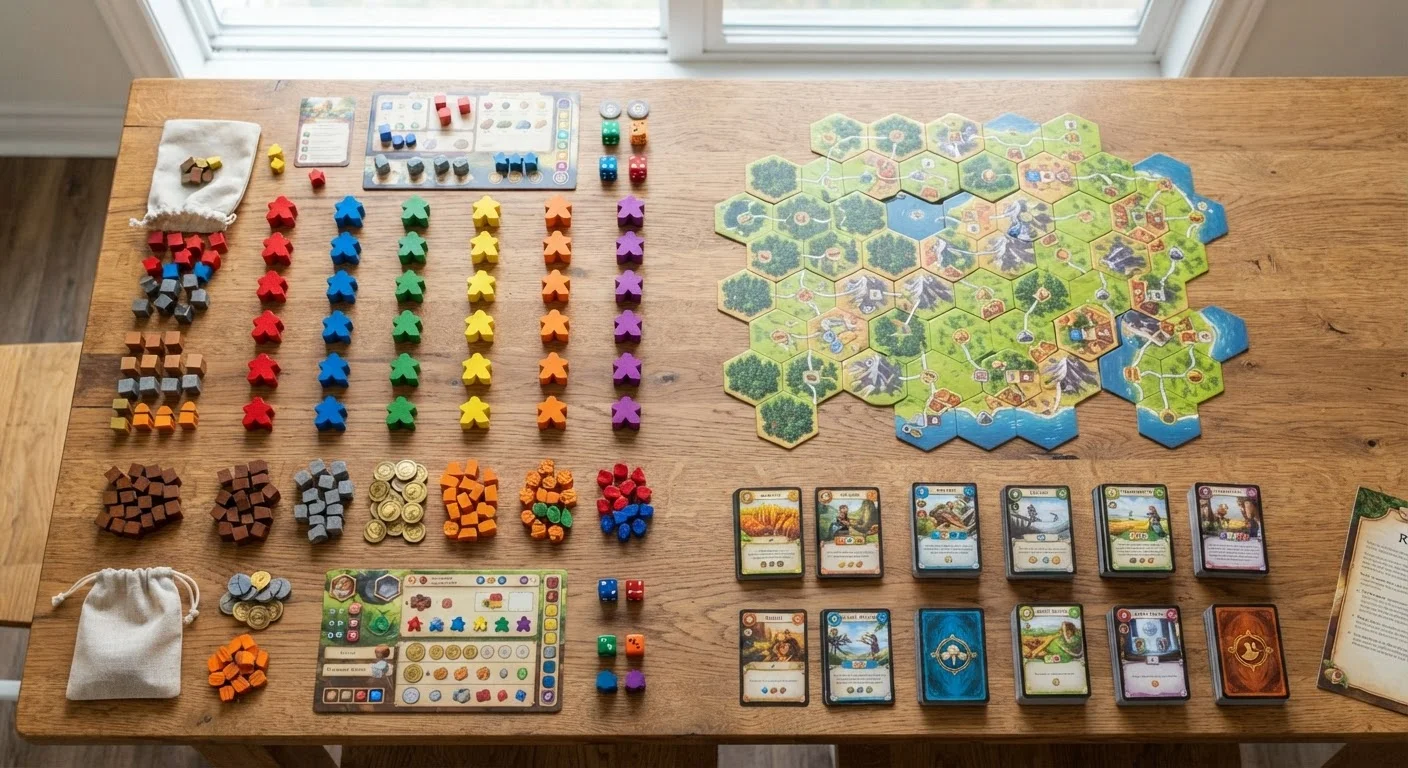
A design style emphasizing resource management, indirect competition, and minimal randomness. Often features wooden pieces, point-scoring victory conditions, and little direct player conflict.
Worker Placement
A mechanic where players take turns placing tokens on action spaces to claim exclusive benefits. Competition arises from blocking opponents rather than direct conflict.
Deck-Building
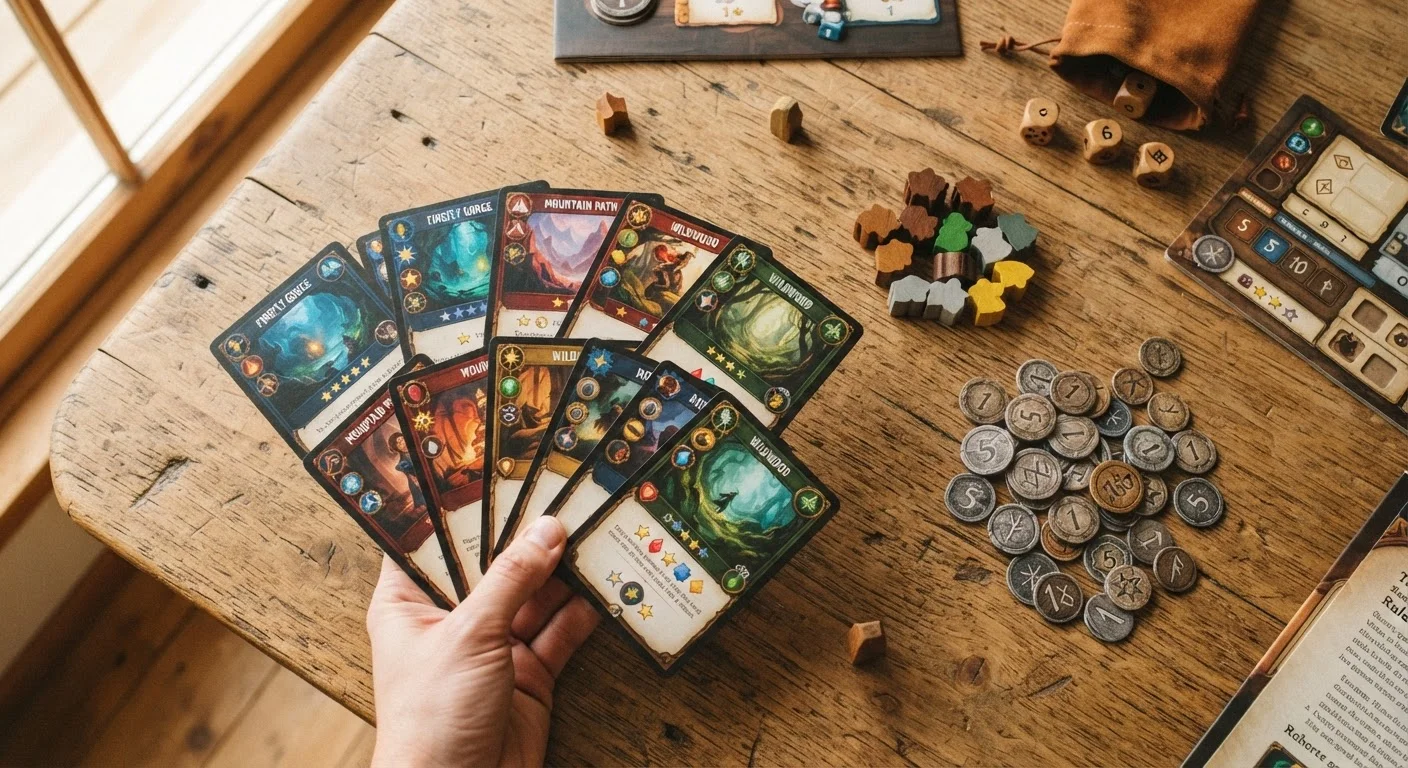
A mechanic where players start with a basic card deck and acquire new cards from a central pool during play, gradually personalizing and improving their deck.
Engine Building
A style of play in which a player constructs a growing system of synergistic abilities or resources that generate increasing returns as the game progresses.
Take-That Mechanic
Any rule or card that allows one player to directly harm, steal from, or set back another player. Common in lighter and more chaotic games.
Variable Player Powers
A design feature giving each player a unique starting ability or role that differs from other players, adding asymmetry and replayability to the game.
Co-op (Cooperative Game)
A game format where all players work as a team against the game system itself. The group wins or loses together.
Gateway Game
A board game designed to be accessible to newcomers — typically featuring simple rules, short play time, and broad appeal. Used to introduce people to hobby gaming.
Drafting
A mechanic where players pick cards or tiles from a shared pool and pass remaining options to the next player, making each selection simultaneously strategic and impactful for others.
Area Control
A mechanic in which players compete to dominate geographic regions on a game board, usually by occupying or contesting spaces with tokens or armies.
Filler
A short, low-complexity game typically lasting under 20 minutes, often used to open or close a game night while heavier games are set up or packed away.
Core Game Design Terms
These are the building-block concepts that describe how a game is structured and how players interact with it.
| Oldest recognized modern mechanic | Area control (popularized in wargames of the 1950s–60s) |
| Origin of the Eurogame style | Primarily Germany; flourished in the 1990s |
| Typical gateway game play time | 30–60 minutes |
| Typical heavy game play time | 2–4+ hours |
| Co-op game format | All players vs. the game system |
| Deck-building: starting hand size (typical) | 5–10 cards from a basic starter deck |
Mechanic vs. Theme: A game's mechanic is the system — dice rolling, card drafting, tile placement. The theme is the story wrapper — medieval kingdom, space colony, haunted mansion. A single mechanic can wear many different themes, which is why understanding mechanics helps you predict whether you'll enjoy a game before you play it.
Player interaction spectrum: Games range from highly interactive (players constantly affecting each other) to nearly solo (each player runs their own engine with minimal interference). Knowing where a game falls on this spectrum helps groups avoid mismatched expectations at the table.
If you're thinking about bringing newcomers into the hobby, our article on why gateway games matter explains how to pick the right starting point.
Game Categories and Styles
The modern board game hobby has developed shorthand for recognizable design traditions and player experiences.
- Euro-game (Eurogame): A style originating largely from German publishers emphasizing resource management, indirect competition, and low luck. Players rarely eliminate each other directly.
- Ameritrash (Amerigame): A playful, community-coined term for games featuring strong themes, high luck, direct conflict, and dramatic moments — often with lots of dice.
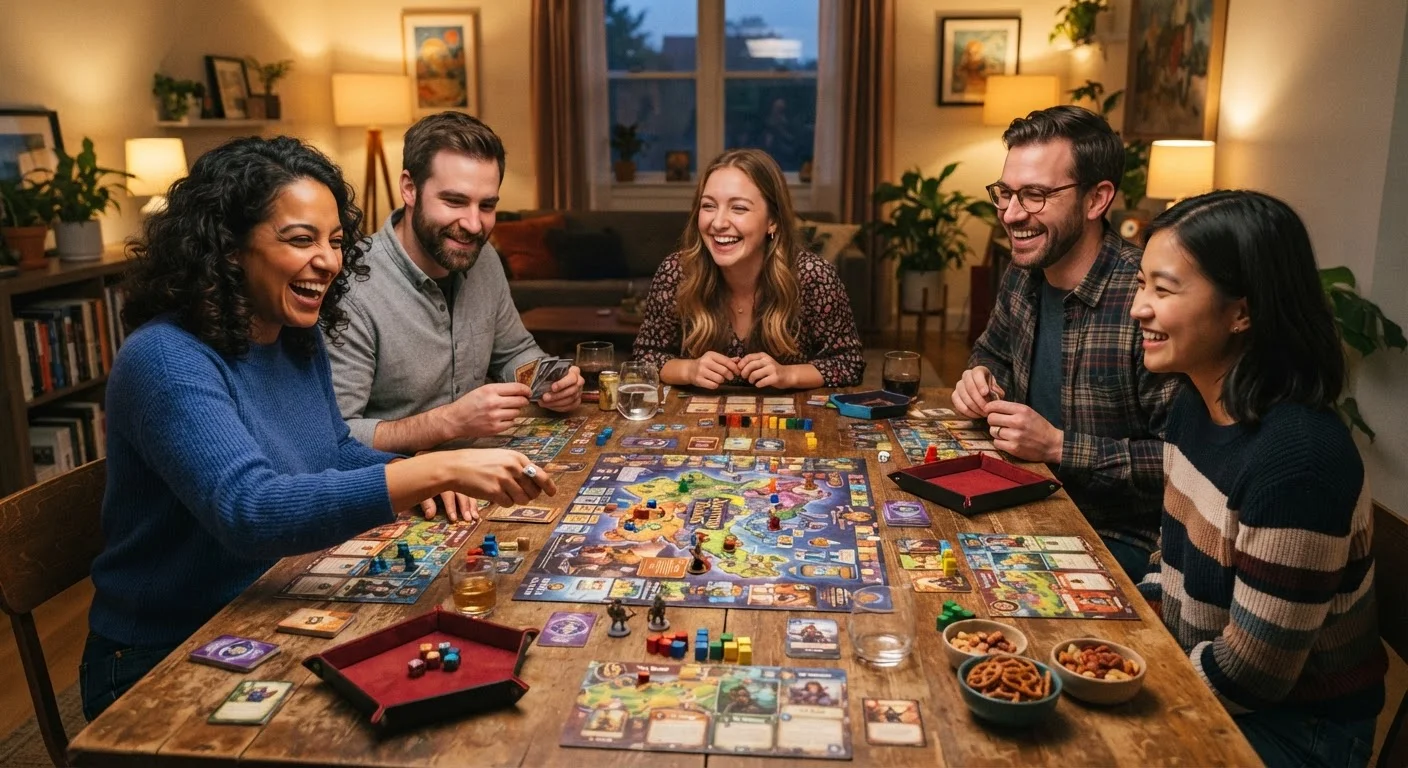
- Gateway game: A game designed to be welcoming to newcomers — simple rules, short play time, broad appeal.
- Filler: A short, light game (typically under 20 minutes) used to start or end a game night while others set up or wind down.
- Heavy game: A complex title with many rules, long play times, and significant strategic depth — generally aimed at experienced hobbyists.
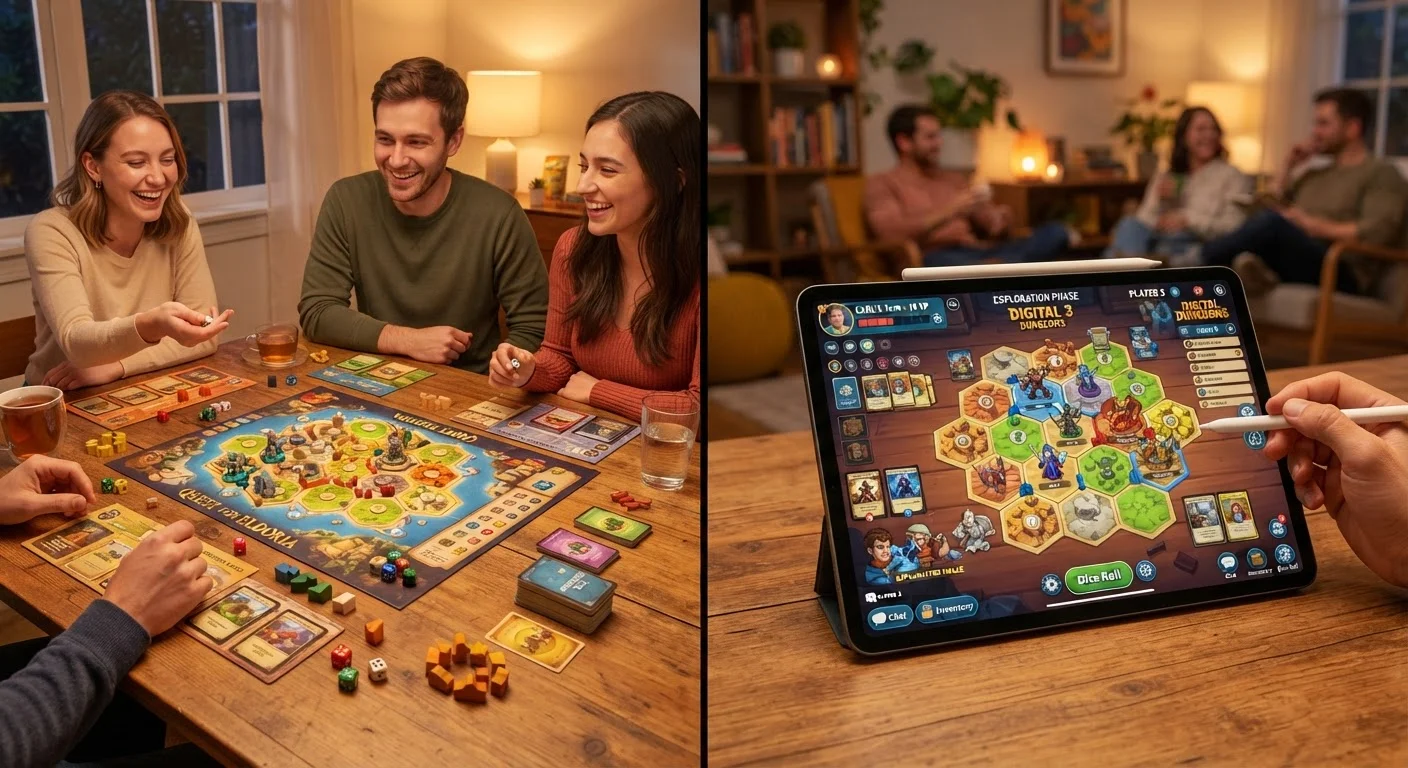
Many beloved games now also exist as apps or digital ports. For a balanced look at how tabletop and digital experiences compare, see our article on digital adaptations vs. physical board games.
Popular Mechanics at a Glance
Mechanics are the heart of any game. Here are the ones you'll encounter most often in modern hobby gaming.
- Worker placement: Players place tokens (workers) on limited action spaces to claim resources or abilities. Only one player can use a space at a time, creating competition without direct combat.
- Deck-building: Players start with a small personal deck of cards and acquire better cards during play, shuffling them in to improve their engine over time.
- Engine building: Players construct an interconnected set of abilities or resources that become more powerful as the game progresses.
- Area control: Players compete to dominate regions of a map, typically by placing pieces or winning conflicts.
- Take-that mechanic: Any mechanic where a player directly and negatively affects another — stealing resources, destroying pieces, or forcing disadvantageous actions.
- Drafting: Players select cards or tiles from a shared pool, passing the remainder to the next player. Choices are meaningful because what you take also shapes what others receive.
- Co-op (cooperative): All players work together against the game itself, winning or losing as a team.