The Core Loop: Buy, Shuffle, Draw, Repeat
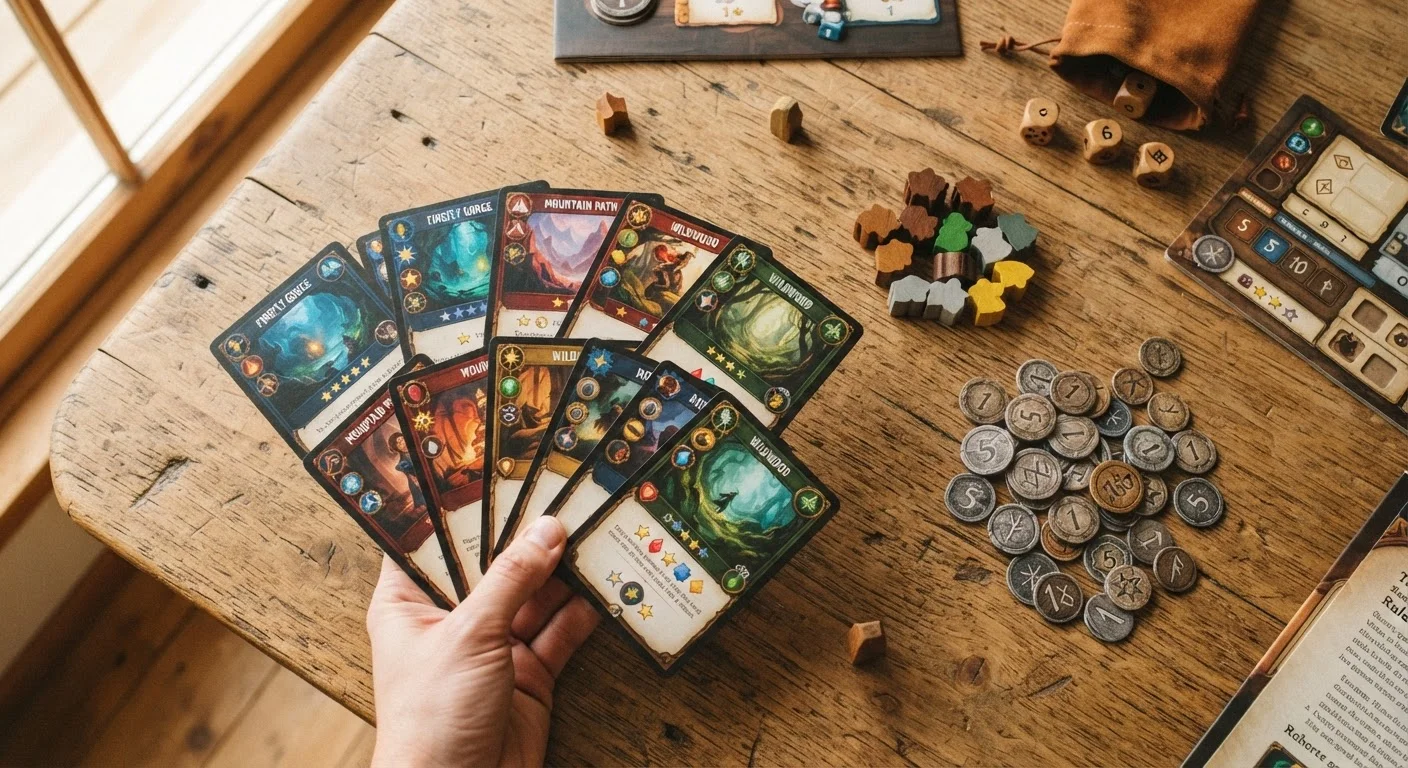
At the heart of every deck-building game is a simple, satisfying loop. On your turn, you draw a hand of cards from your personal deck, use those cards to take actions or generate resources, spend those resources to acquire new cards from a shared market, and then discard everything you played. When your draw pile runs out, you shuffle your discard pile and start drawing again — only now your deck contains all those shiny new cards you've been picking up.
That's it. That's the core mechanic. The elegance lies in what happens over time: your deck gradually evolves from a thin collection of weak starters into something coherent and powerful — or chaotic and inefficient, if you've been making questionable choices. Every acquisition decision matters because you'll eventually draw whatever you add.
For a quick reference to the vocabulary used in deck-builders and other modern games, check out our board game terms glossary.
Prioritize Synergy Over Raw Power
When browsing the card market, resist the urge to always buy the flashiest or most expensive card available. Cards that work together — for example, cards that trigger bonuses when you play multiple of the same type — will outperform a random collection of individually powerful cards. Think about what your deck is trying to do and buy toward that plan.
Why the "Deck Thinning" Concept Changes Everything
One of the counterintuitive lessons new deck-builder players learn quickly: adding cards to your deck isn't always good. If your deck becomes bloated with weak or situational cards, you'll draw bad hands more often. Experienced players talk about "deck thinning" — deliberately including cards or effects that let you remove useless starter cards from your deck entirely, increasing the odds that each hand you draw is packed with useful options.
This tension between acquiring more cards and keeping your deck lean is what gives the mechanic its strategic depth. It separates a good decision-maker from someone who just buys whatever looks powerful in the moment.
2008
Year deck-building emerged as a distinct mechanic
The mechanic is widely recognized as having been established in modern tabletop gaming around 2008, catalyzing a wave of new designs throughout the 2010s.
30–90 min
Typical play time for most deck-builders
Most commercially available deck-building games are designed to complete in under 90 minutes, fitting neatly into a game night or casual evening session.
1–6
Typical player count range
Deck-builders are among the most flexible formats in modern tabletop gaming, with many titles supporting everything from solo play to groups of six.
How Deck-Builders Differ from Other Card Game Formats
If you've played collectible card games (CCGs) like Magic: The Gathering, the deck-building format will feel familiar but meaningfully different. In a CCG, you build your deck before the game using cards you own — often acquired over time by purchasing packs or trading. That pre-game construction is a substantial hobby in itself.
In a deck-builder, the construction happens during play, from a shared pool everyone draws from. This levels the playing field considerably and eliminates the need for any ongoing financial investment beyond the box. It also means opponents can compete for the same cards, adding a subtle layer of resource competition even in otherwise low-conflict games.
Deck-builders also differ from traditional card games like Poker or Rummy, where the deck is fixed and impersonal. Here, your deck is a direct reflection of your decisions throughout the session.
Curious how deck-builders compare to other styles of play? Our piece on abstract strategy vs. thematic games puts different game experiences in helpful contrast.
Solo, Competitive, and Cooperative Variations
One of the format's underappreciated strengths is its versatility. Deck-builders exist in all three major configurations:
- Competitive: Players race to accumulate victory points or trigger an end condition before opponents can. Card market competition is often central.
- Cooperative: Players work together against a shared challenge — often a villain deck or escalating threat. Each player's deck serves a specialized role. Our guide to cooperative board games explains how that dynamic works.
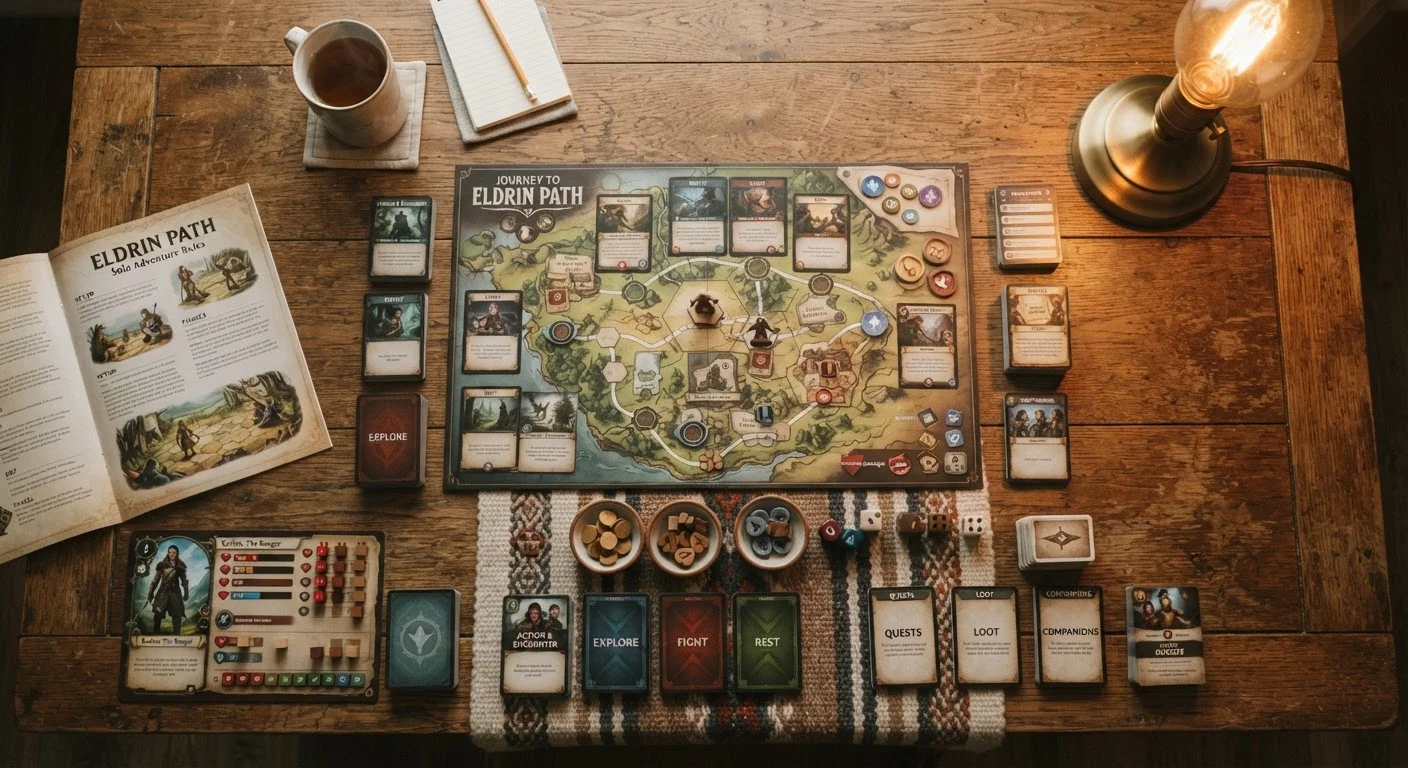
- Solo: Many deck-builders include a robust single-player mode with automa systems or puzzle-like challenges. The format suits solo play naturally because building an efficient engine is satisfying on its own terms.
This flexibility is part of why deck-building has become one of the most enduring mechanics in modern board gaming. Whether you're playing with a competitive sibling or a cooperative family, there's likely a deck-builder that fits.
Getting Started: What to Expect Your First Game
Your first session with a deck-builder will likely feel a little slow. The early rounds involve weak cards doing modest things — that's intentional. The fun accelerates as your deck starts clicking into place, usually by the midgame. Don't be discouraged if your first few turns feel underwhelming.
A few things that help first-timers get oriented:
- Read the card market before buying — understand what synergies are available before committing resources.
- Don't ignore starter card removal when it's offered — trimming weak cards early pays dividends later.
- Watch what opponents are buying; if a key card is running low, decide whether to pivot or compete.
If you're new to modern board gaming generally, the gateway games guide is a great place to understand which titles ease newcomers in most comfortably — several of the most beloved gateway games are deck-builders.