What Makes a Game 'Abstract'?
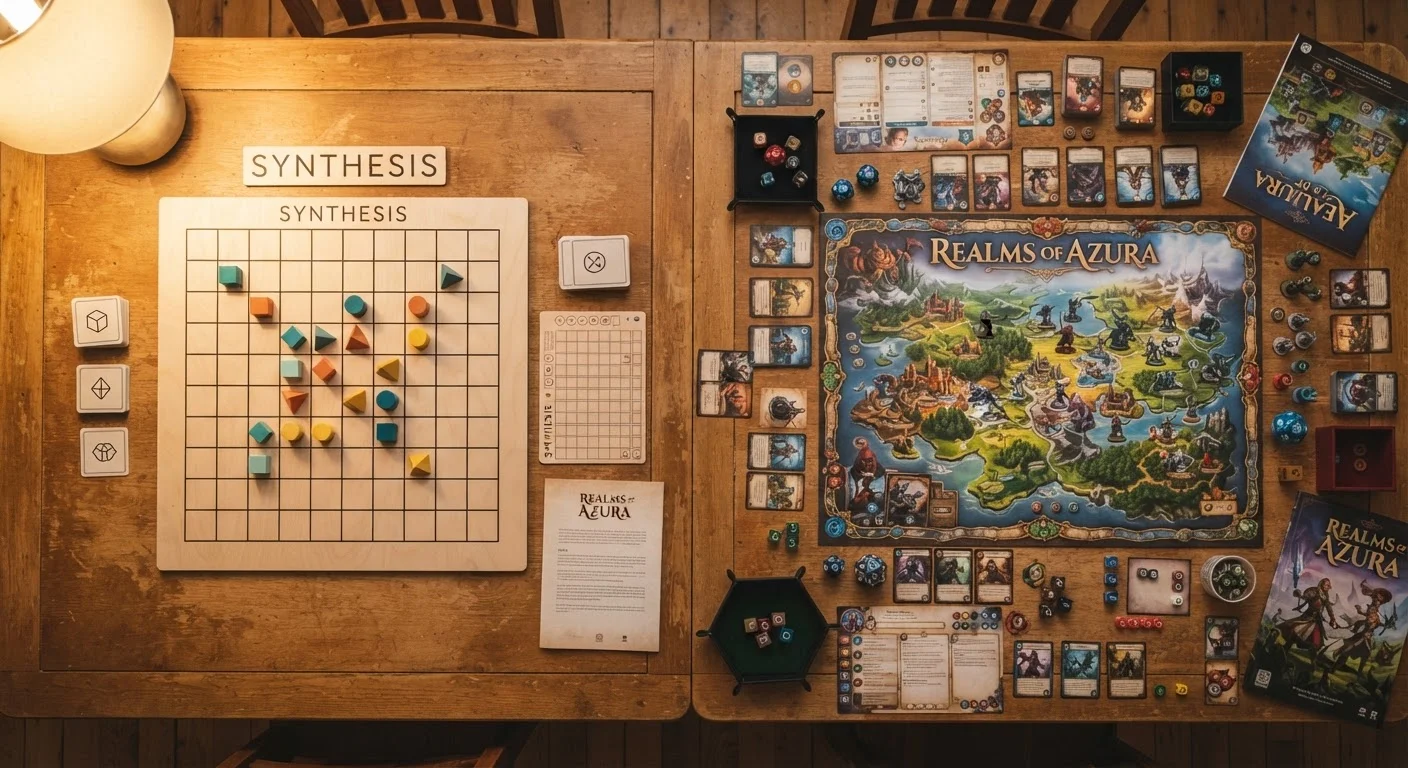
Abstract strategy games are defined by what they deliberately leave out: theme, story, and randomness. The board, the pieces, and the rules are the entire universe. Classic examples include Chess, Go, and Checkers — games where both players have identical information, no cards are drawn from a shuffled deck, and pure decision-making separates winners from losers.
What makes this category fascinating is its depth-to-simplicity ratio. The rules of Go can be explained in minutes; mastering the game is a lifelong pursuit. That tension between accessible rules and near-infinite strategic depth is the defining draw. If you enjoy the feeling of a well-earned win — one no one can attribute to lucky dice — abstract games deliver that satisfaction cleanly.
Modern abstract designs have expanded far beyond ancient classics. Many feature clever geometric puzzles, tile-laying challenges, or connection mechanics that feel fresh while honoring the tradition of pure play. For a deeper look at the vocabulary surrounding these designs, the Quick-Reference Glossary of Board Game Terms is a handy reference.
What Defines a Thematic Game?
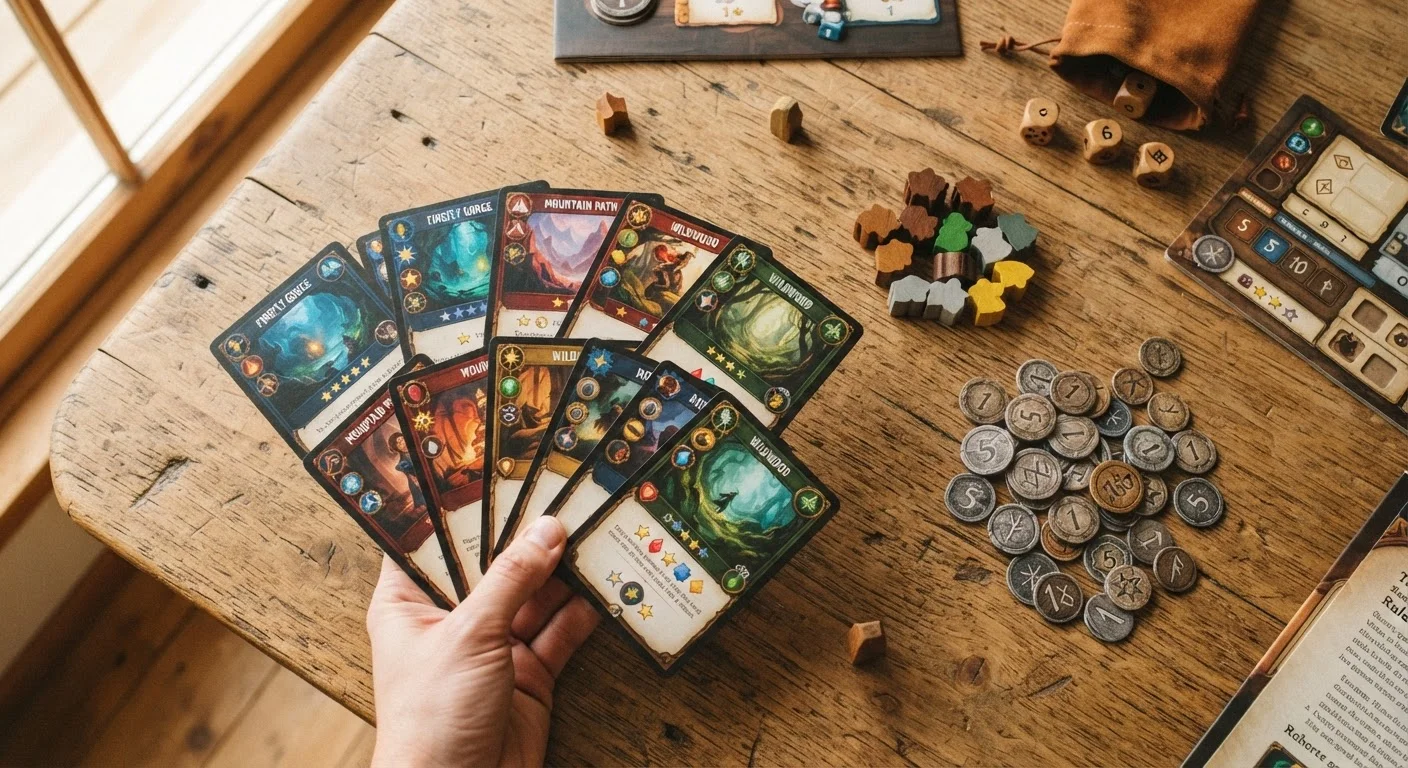
Thematic games — sometimes called Ameritrash (a term used affectionately by enthusiasts) or adventure games — lead with atmosphere. You're not just moving pieces; you're a space marine defending a colony ship, a detective unraveling a murder mystery, or an explorer navigating a cursed dungeon. The mechanics exist to support and reinforce that fiction.
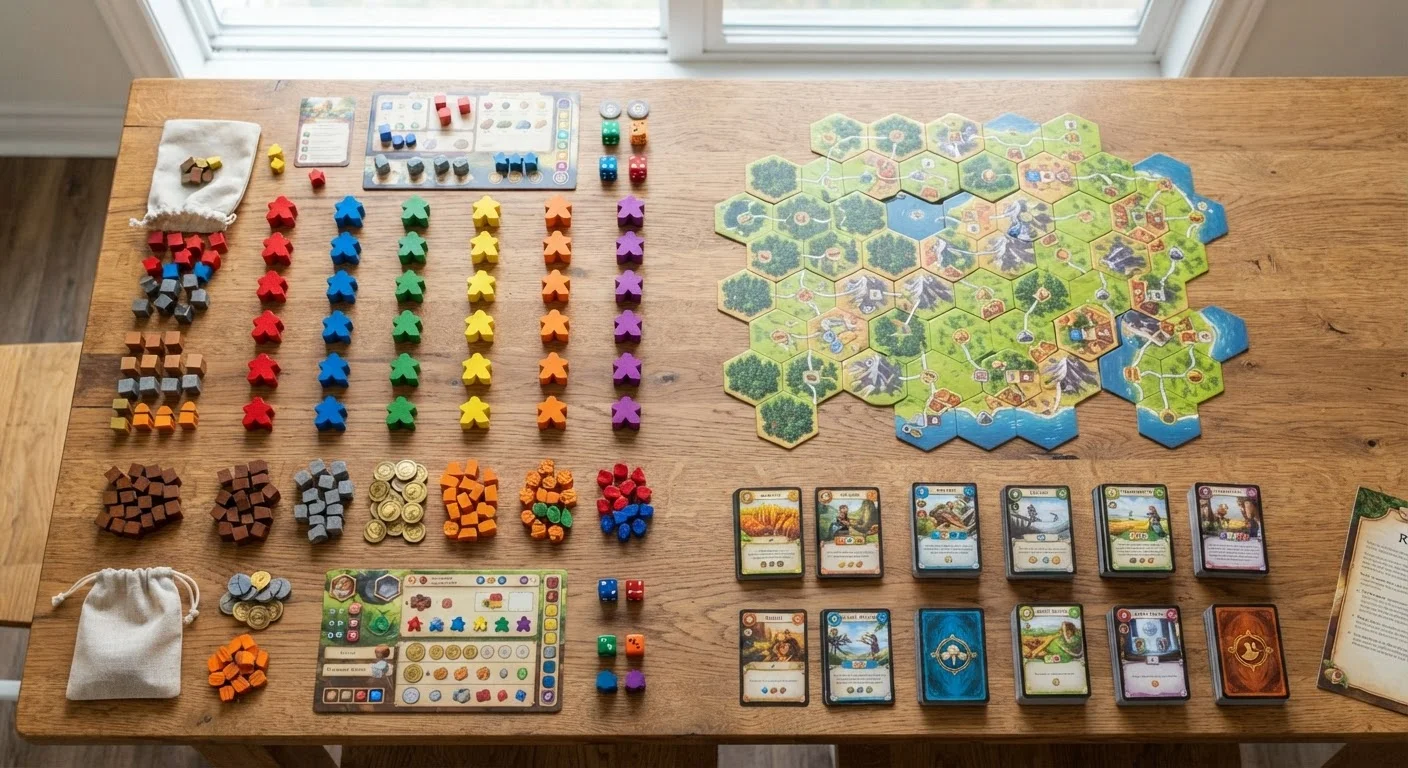
These games typically feature asymmetric player roles, randomized elements like card draws and dice rolls, and elaborate artwork designed to pull you into the setting. Setup can take time, rulebooks run longer, and sessions often stretch across an evening — but for many groups, that investment is the point. The experience of a dramatic last-minute escape or a surprise plot twist is exactly what they came for.
Thematic games are also a natural gateway for people new to hobby gaming. The story gives context to every action, making rules feel intuitive rather than arbitrary. If your household includes players across a wide age range, see our guide on playing games with mixed ages for ways to match game choice to your group's dynamics.
| Criterion | Abstract Strategy Games | Thematic Games |
|---|---|---|
| Core appeal | Pure logic and skill | Story and atmosphere |
| Role of luck | None or minimal | Often significant |
| Typical session length | 15–60 minutes | 1–4+ hours |
| Rulebook complexity | Usually short | Often lengthy |
| Component count | Minimal | Often extensive |
| Player count sweet spot | 2 players | 3–6 players |
| Mastery curve | Deep and long | Varies by game |
| Portability | Highly portable | Often bulky |
Key Differences That Actually Matter at the Table
Understanding the structural differences helps you pick the right game for the right night. Luck plays a central role in thematic games — dice rolls, random card draws, and hidden information create dramatic swings that feel cinematic but can frustrate players who prefer full control. Abstract games eliminate that variable entirely, which makes them more replayable in a purely competitive sense but less surprising.
Downtime between turns is another practical factor. Thematic games with complex role interactions can leave players waiting while others resolve lengthy action sequences. Abstract games tend to move quickly because each turn is self-contained. Component count also differs dramatically: a thematic dungeon-crawler might include hundreds of cards, tokens, and miniatures, while an abstract game might fit in a small pouch.
~70%
Thematic games in hobby market top sellers
Industry observers at BoardGameGeek consistently note that thematic and adventure-style games dominate the most-discussed titles on their platform, reflecting broad mainstream appeal.
2,500+
Years Go has been played competitively
Go, one of the most celebrated abstract strategy games, has documented competitive play spanning more than two millennia, illustrating the enduring appeal of the abstract format.
3–5x
Longer average setup time for thematic games
Hobbyist community surveys suggest thematic games with miniatures and scenario books take significantly longer to set up than comparable abstract titles.
Finally, consider replayability through a different lens. Abstract games are replayable because the strategic space is vast — the same board produces a different game every time based on player choices alone. Thematic games replay well when the narrative or scenario system is robust enough to generate new stories. Some even offer legacy formats where the game world permanently changes between sessions, which is a uniquely thematic innovation you won't find in abstract designs.
Can a Game Be Both? The Blurry Middle Ground
The boundary between abstract and thematic isn't as rigid as it once was. A growing number of modern designs apply a light thematic coat to an otherwise abstract engine — giving players a narrative reason to care without letting story overwhelm the strategy. These hybrid designs can be a great entry point for groups where some players want immersion and others want a tight puzzle.
Deck-building games, for instance, often sit in this middle space: the card economy is abstract and deeply strategic, but many implementations wrap it in a compelling fictional universe. Our introduction to deck-building mechanics unpacks how that format works from the ground up.
Similarly, escape room games at home lean heavily thematic — narrative tension is the whole point — yet the puzzle logic underneath is essentially abstract problem-solving. If that format intrigues you, explore escape room games at home to understand what to expect. The takeaway: don't feel constrained to pick a camp. The hobby is wide, and both traditions have genuinely thrilling things to offer.