
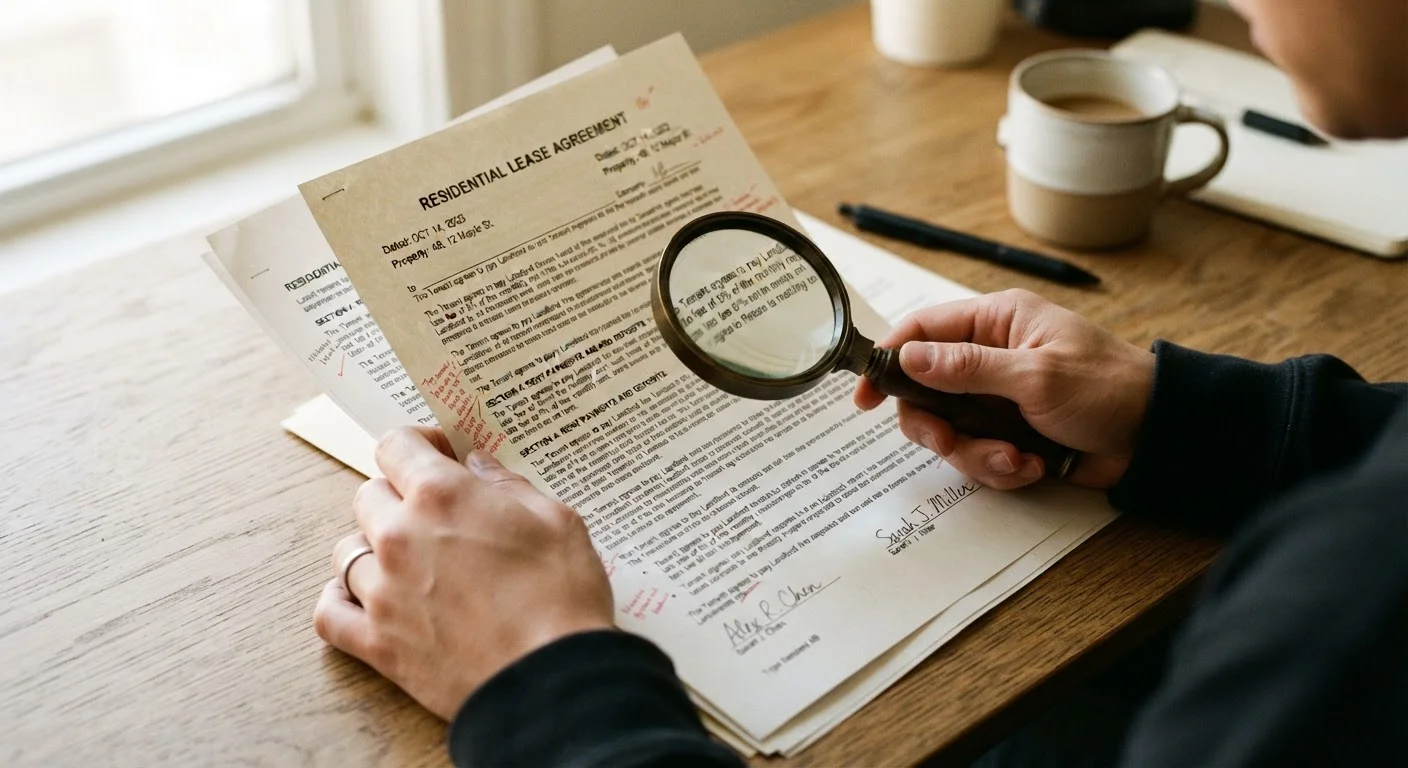
Why Red Flags Deserve More Than a Passing Glance
Finding a rental that fits your budget and location can feel like a win — but excitement shouldn't override scrutiny. Both online listings and lease agreements contain language that, if overlooked, can cost renters hundreds or even thousands of dollars. Some warning signs point to outright fraud; others reveal landlords who may not meet their legal obligations. Either way, the time to catch problems is before you sign, not after.
If you're new to the rental process, our ground-up guide to finding and signing a lease provides a useful foundation. For experienced renters, this list focuses on the specific language and listing patterns most likely to cause trouble.
Rent that seems too good for the market
When a listing price falls well below comparable units in the same neighborhood, that gap demands explanation. Occasionally a landlord prices low to fill a vacancy fast, but more often a suspiciously low rent signals either a rental scam — where the "landlord" has no legal right to rent the property — or a unit with serious undisclosed problems such as persistent mold, code violations, or a pending foreclosure. Cross-reference the asking rent against current listings in the area. If you can't explain the gap, investigate before you engage further.
A rent price well below market almost always needs a clear explanation before you proceed.
Listing photos that hide the property's identity
Legitimate listings typically include exterior shots, street-level views, and enough detail to verify the address independently. When photos show only interior angles that could belong to any unit — or the address is withheld entirely until you "confirm interest" — treat it as a significant warning. Scammers frequently lift photos from real listings and create fraudulent posts under different contact information. Use a reverse image search to verify that listing photos haven't been copied from another source, and confirm the property address independently before scheduling any visit or sending any money.
Reverse image search any listing photos that feel too polished or oddly generic.
Pressure to pay a deposit before viewing the unit
Any landlord or agent who asks for a deposit, application fee, or "holding fee" before allowing you to see the property in person — or insists they are out of town and will mail keys — is exhibiting a textbook scam pattern. Legitimate landlords and property managers do not require upfront payment as a condition of a viewing. Never send money via wire transfer, gift cards, or peer-to-peer payment apps to an unverified party. These payment methods are difficult or impossible to reverse if fraud is confirmed.
No legitimate landlord requires payment before an in-person viewing of the unit.
Vague or one-sided maintenance language
A well-drafted lease clearly identifies who is responsible for specific types of repairs and the timeline for addressing them. Be cautious of clauses that assign "all maintenance" to the tenant without distinguishing between ordinary wear and landlord obligations, or that use phrases like "landlord will make repairs at their discretion." Most states impose a legal duty of habitability on landlords — meaning they must keep the unit safe and livable regardless of what a lease says. Our article on what landlords are legally required to fix explains which repairs typically cannot be contracted away. Vague language, even if unenforceable, creates room for disputes.
Leases that assign "all maintenance" to tenants often conflict with state habitability law.
Ambiguous or excessive security deposit terms
State laws cap security deposit amounts and define the conditions under which deductions are lawful. A lease that doesn't specify the deposit amount in writing, fails to list the conditions for return, or includes language like "deposit may be retained for any damage or cleaning at landlord's judgment" provides inadequate protection. Similarly, watch for clauses that extend the landlord's window for returning deposits beyond what state law allows, or that list deductible items in unusually broad terms. For a detailed breakdown of permissible versus improper deductions, see security deposit rules.
Security deposit clauses that contradict state law don't become enforceable just because they're in writing.
Clauses waiving your right to notice or legal recourse
Some leases include provisions stating the tenant waives their right to advance notice before landlord entry, agrees not to pursue legal remedies for habitability failures, or consents to immediate eviction without court process. In most U.S. jurisdictions, these clauses are not legally enforceable — tenant rights established by state statute generally cannot be signed away by contract. However, such language is still a serious warning sign about how a landlord intends to operate. A landlord who includes unenforceable waiver clauses may be counting on tenants not knowing their rights. For help decoding dense lease language, our guide on what each lease clause actually means is a practical resource.
Tenants cannot legally waive most state-granted rights, even if a lease clause says otherwise.
No written record of verbal promises
If a landlord verbally assures you that the broken appliance will be fixed before move-in, that the parking space is included, or that the pet policy is flexible, those promises mean nothing without written confirmation. Verbal agreements are extremely difficult to enforce in a landlord-tenant dispute. Before signing any lease or paying a deposit, request that all agreed-upon terms be incorporated into the lease itself or documented in a signed written addendum. Anything a landlord is unwilling to put in writing should be treated as a promise they don't intend to keep.
If a landlord won't put a promise in writing, assume it won't happen.
What to Do Before You Commit
Identifying a red flag doesn't necessarily mean walking away — sometimes it means asking the right questions or requesting a clause be rewritten. Our guide on negotiating lease terms explains which provisions landlords commonly agree to change. Before handing over any money, also complete a thorough walkthrough using a pre-lease walkthrough checklist and document the unit's condition in writing.
If you've spotted concerning lease language around deposits, read up on what landlords can and cannot keep from a security deposit so you know your rights from day one. And if life circumstances change after you sign, breaking a lease early carries real costs — another reason due diligence up front matters.
Bring a Checklist to Every Showing
Touring a unit under time pressure makes it easy to miss warning signs. Download or print a pre-lease walkthrough checklist before any showing and take dated photos of every room. This documentation protects you if deposit disputes arise later — and the act of methodical note-taking often prompts landlords to be more forthcoming about known issues.
This article provides general information about common rental listing and lease warning signs. It is not legal advice. Tenant rights and landlord obligations vary significantly by state and locality. Consult a qualified attorney or your local tenant rights organization for guidance specific to your situation.