Why Smart Home Compatibility Has Been So Difficult
For years, buying a smart home device meant committing to an ecosystem. A bulb certified for one platform might be completely invisible to another, and mixing brands often meant juggling three or four separate apps. This fragmentation existed because manufacturers built proprietary communication layers on top of existing radio protocols like Zigbee, Z-Wave, Bluetooth, and Wi-Fi — each with their own rules for how devices discovered and talked to each other.
The result was a landscape where compatibility was more exception than rule. For a deeper look at how those underlying protocols create friction, see why smart home devices stop talking to each other. Matter was designed specifically to replace that fragmented layer with a single, shared application-level language that any manufacturer can implement.
What Matter Actually Does Under the Hood
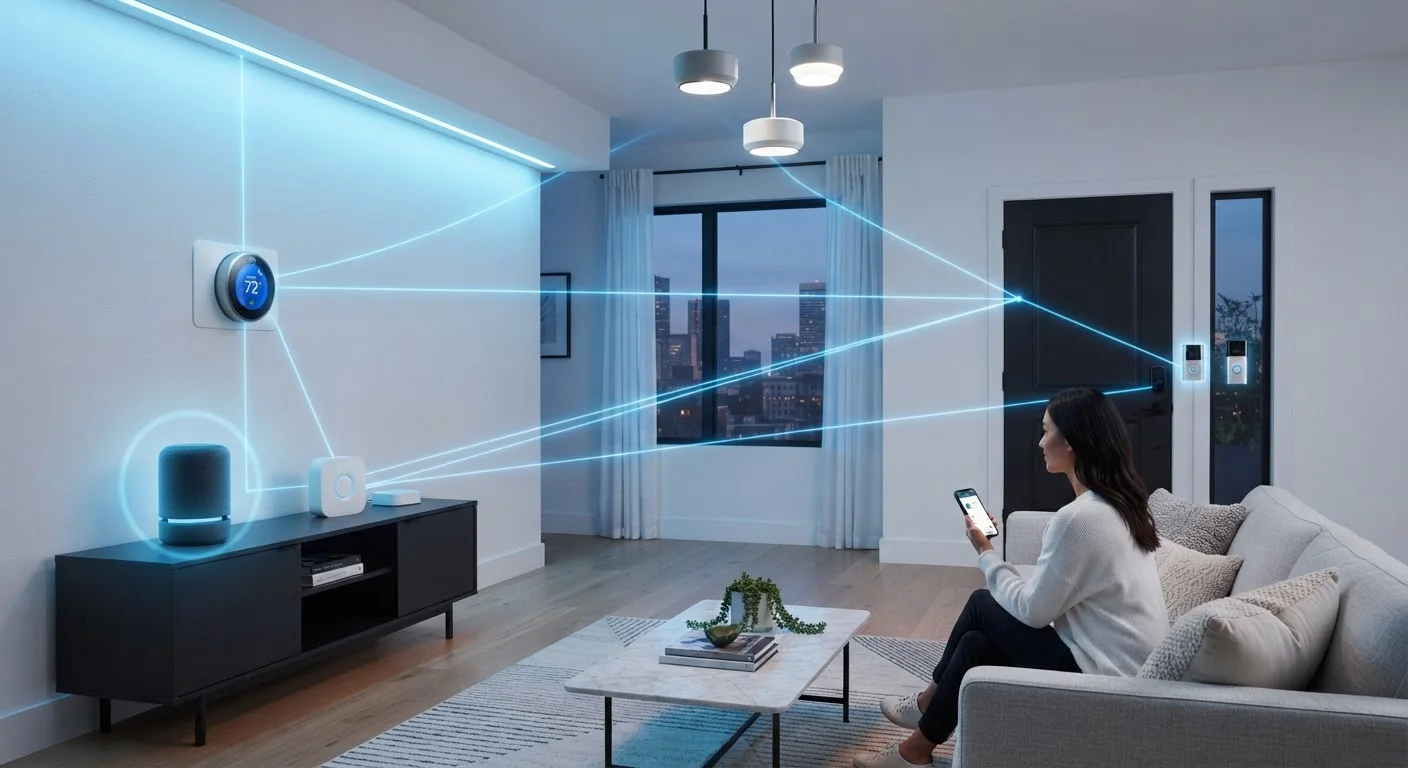
Matter operates at the application layer — the part of a communication stack that defines what messages mean, not just how they travel. Think of it like a universal translator sitting on top of your home network. Devices still use Wi-Fi or Thread to physically move data, but Matter standardizes the vocabulary: what a command to dim a light looks like, how a lock reports its status, what attributes a thermostat must expose.
Each Matter device carries a device attestation certificate, a cryptographic credential that proves it passed the CSA's conformance testing. Before a device joins your network, your controller verifies this certificate — a process called commissioning. This step is invisible to the user but is central to Matter's security model.
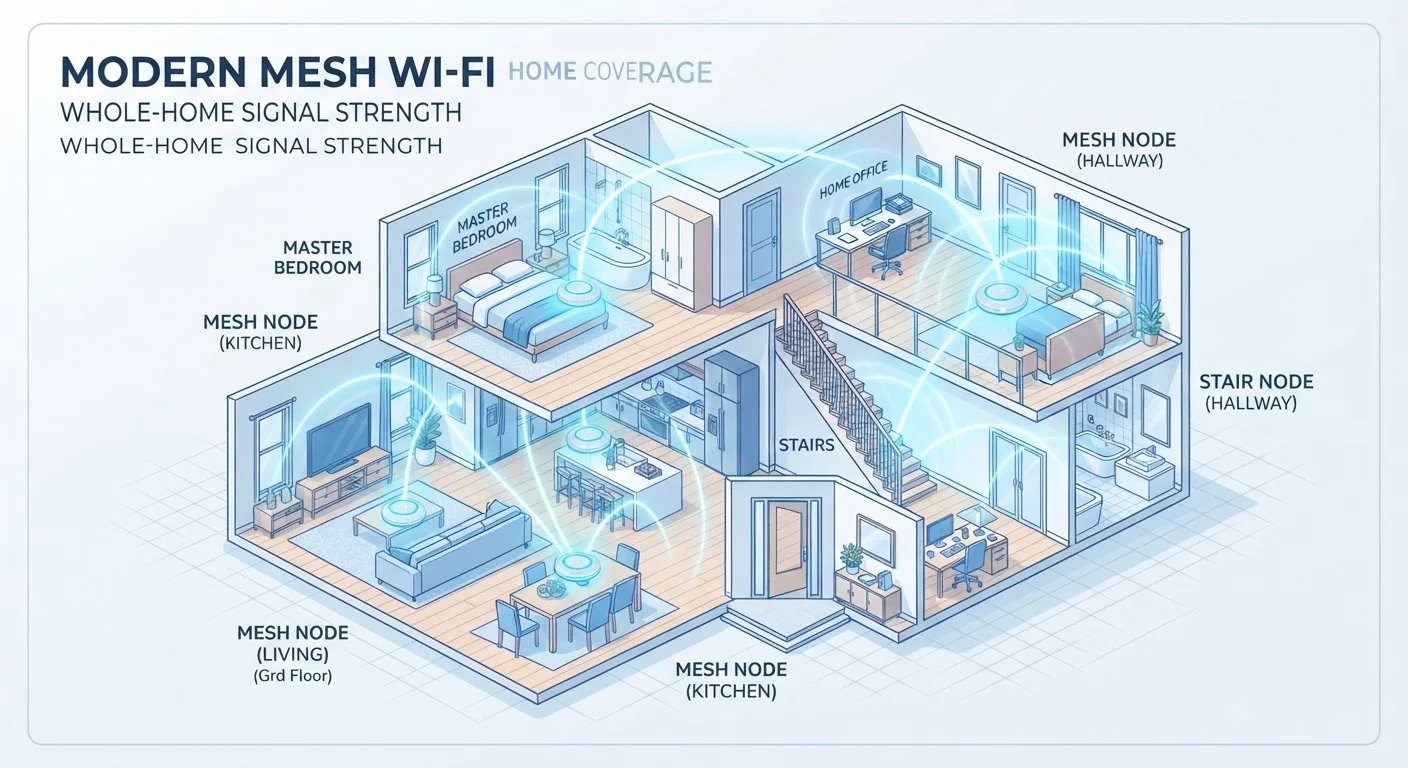
Thread, a low-power mesh protocol, is Matter's preferred transport for small, battery-powered devices. Thread devices form a self-healing mesh, so if one node goes offline, traffic routes around it. Crucially, Thread requires a Thread Border Router to connect to your broader IP network. Many modern smart speakers and hubs include one, but if yours doesn't, Thread-based Matter devices won't function correctly. Understanding your home network infrastructure — including how mesh systems handle traffic — is useful context; see how home Wi-Fi mesh networks work for a full explanation.
750+
Matter-certified devices at launch milestone
The Connectivity Standards Alliance reported over 750 certified Matter devices within roughly one year of the standard's release in late 2022.
4
Major platforms supporting multi-admin
Apple Home, Google Home, Amazon Alexa, and Samsung SmartThings all support Matter's multi-admin feature, allowing a single device to appear across platforms simultaneously.
~10ms
Typical local command latency over Thread
Thread's mesh architecture enables round-trip command latency in the low milliseconds on a local network, compared to hundreds of milliseconds for cloud-routed commands.
What Matter Genuinely Changes
The most meaningful shift Matter brings is multi-admin support — the ability to add a single physical device to multiple ecosystems simultaneously. A Matter-certified smart lock can appear natively in both Google Home and Apple Home at the same time, responding to voice commands from either without any workarounds. Previously, this required unsupported hacks or simply wasn't possible.
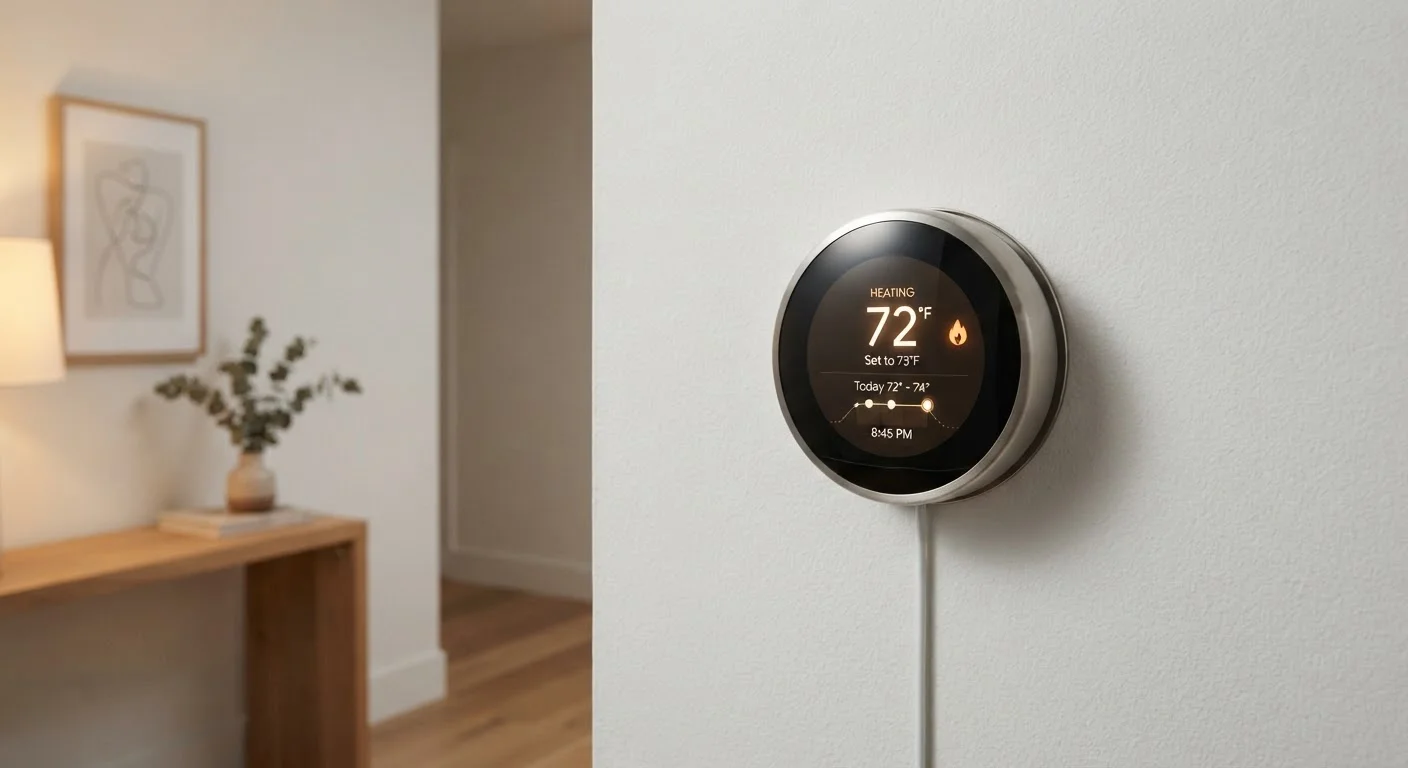
Matter also pushes more processing locally. Because devices share a common protocol, controllers can issue commands directly on the home network rather than routing every request through a manufacturer's cloud server. This reduces latency and means basic automations often survive an internet outage. For devices like smart thermostats — which already do significant local processing — Matter extends that local-first model further. See how smart thermostat learning algorithms operate for related context on local data handling.
What Matter Doesn't Fix
Matter is not a magic upgrade for existing hardware. Most devices manufactured before Matter's release cannot receive a software update to become Matter-compatible — the hardware-level radio firmware and memory constraints typically prevent it. A handful of manufacturers issued bridge updates that exposed existing devices to Matter networks through a hub, but this is the exception.
Advanced or manufacturer-specific features also remain siloed. Matter defines a common baseline — on/off, brightness, color temperature, lock state — but features that go beyond that baseline, such as energy-use history on a smart plug or proprietary scene engines on a lighting system, are not standardized. Users who rely on those features still need the manufacturer's own app.
Finally, Matter doesn't address all device categories equally. Its initial specification covered lights, plugs, locks, thermostats, and a handful of sensor types. Cameras, robot vacuums, and appliances were added gradually in subsequent specification versions, and support varies by platform. If you're unfamiliar with core smart home terminology like hubs, protocols, or local processing, a smart home glossary is a useful starting point before diving deeper.
How to Think About Matter When Buying Devices
When a device is labeled Matter-certified, it guarantees a minimum level of interoperability — not a maximum. Verify that the specific platforms you use (Apple Home, Google Home, Amazon Alexa, Samsung SmartThings) are listed as supported controllers for that device, since not every Matter feature is equally implemented across every platform.
Check whether your ecosystem hub or smart speaker includes a Thread Border Router if you're considering Thread-based Matter devices. Without one, those devices may default to Wi-Fi — functional, but without the mesh resilience and battery efficiency Thread offers.
Matter is a meaningful step toward a less frustrating smart home experience, but it works best when you understand both what it standardizes and where manufacturer ecosystems still hold the cards.