Why the 'Educational' Label Misleads Parents
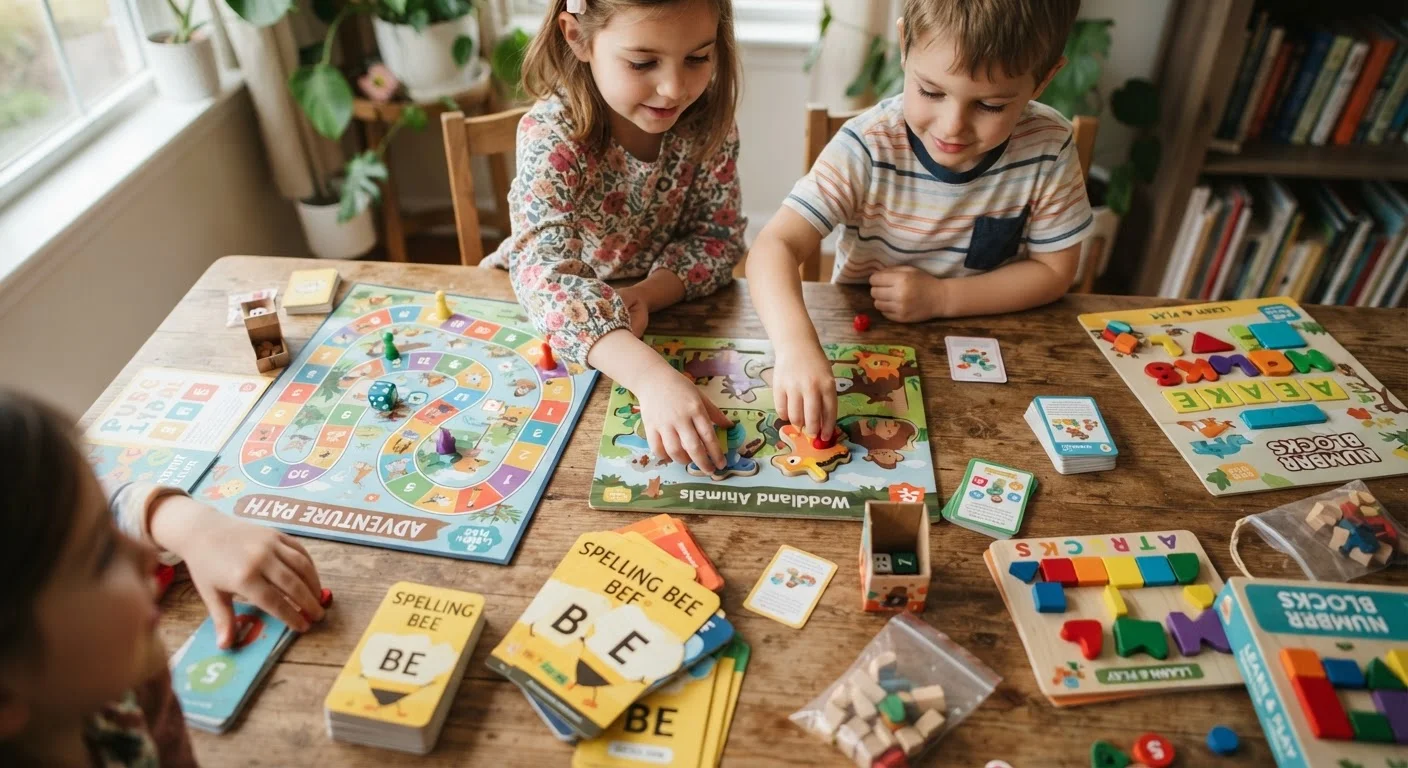
Walk through any toy aisle and you'll see 'educational' splashed across dozens of game boxes. It's a reassuring word — it suggests the product has been vetted, approved, and proven to help children grow. The reality is more complicated. In the United States, no independent body certifies games as genuinely educational before that label can appear on packaging. It is, at its core, a marketing decision made by the manufacturer.
That doesn't mean labeled games are worthless — many are well designed and genuinely engaging. It does mean parents need better tools than box copy for making good choices. Age-range indicators, skill descriptors (such as 'encourages strategic thinking' or 'builds vocabulary'), and honest reviews from educators or child development specialists are all more reliable signals than the label itself.
Labels Don't Equal Learning
Regulatory bodies do not verify or certify whether a game actually delivers educational outcomes before it can carry that label. Any manufacturer can print 'educational' on packaging without independent validation. When choosing games for children, look past the marketing copy and examine the actual mechanics, skills required, and engagement level the game demands.
It also helps to simply play the game. A quick ten-minute trial run with your child tells you more about engagement, challenge level, and joy than any marketing claim ever could.
What Real Learning in Play Actually Looks Like
Educational researchers distinguish between passive exposure and active learning. Passive exposure — watching letters scroll by, clicking through flashcards — produces minimal retention for most children. Active learning, where a child has to make meaningful decisions, handle failure, and try again, produces far stronger outcomes.
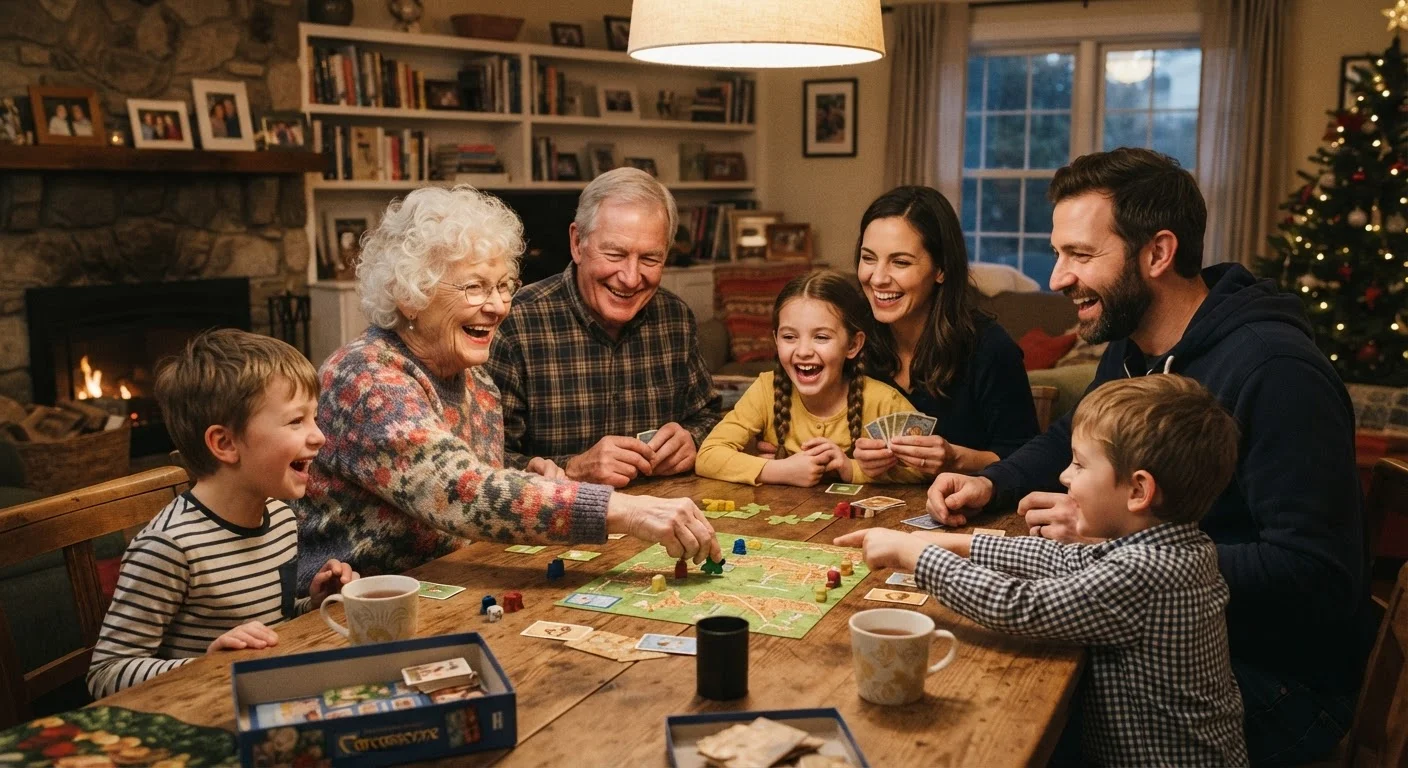
This means a well-designed non-educational game can outperform a poorly designed 'educational' one simply by demanding real thinking. Strategy games, cooperative games, and even creative storytelling games all fit this mold. If you're looking for games that serve mixed-age groups around a table, our guide to playing games with mixed ages offers practical approaches that keep everyone genuinely invested.
Myth
If a game says 'educational' on the box, it must genuinely teach kids something valuable.
Fact
The 'educational' label is a marketing term with no standardized regulatory definition or independent verification requirement.
Manufacturers apply the word 'educational' freely because no government body in the US certifies games before that label can be used. A game might highlight letter recognition on its box while mostly relying on chance-based mechanics that require little active thinking. When evaluating a game, look at the actual skills the mechanics demand — does a child have to plan ahead, read carefully, count strategically, or cooperate? Those observable demands are far more telling than the label itself.
Myth
Games without an educational label are just entertainment and don't help kids learn.
Fact
Many games sold purely as entertainment develop substantial cognitive and social skills, sometimes more effectively than labeled 'educational' alternatives.
Classic games like chess, checkers, and even many modern strategy titles build working memory, forward planning, and pattern recognition. Cooperative games teach negotiation and empathy. Word games sharpen vocabulary without framing it as schoolwork. Research in developmental psychology broadly supports the idea that any play that is challenging, engaging, and social can support learning — the category on the box matters far less than the quality of the experience. For a deep dive into how game mechanics shape the experience, see our guide to abstract vs. thematic games.
Myth
More educational content crammed into a game automatically makes it better for learning.
Fact
Overloading a game with curriculum content often kills engagement, and low engagement drastically reduces how much children actually absorb.
Designers sometimes layer in so many learning objectives — math facts, spelling, science vocabulary — that the game stops being fun. When children disengage, the learning stops too. Educational psychology research points to motivation as a critical driver of learning outcomes. A child who plays a genuinely fun game for an hour retains more than one who grudgingly finishes a content-heavy game in ten minutes. Balance between challenge and enjoyment, sometimes called 'flow,' is what educators look for in well-designed learning games.
Myth
Kids learn just as much from educational games whether or not an adult plays along.
Fact
Adult participation — asking questions, discussing decisions, and connecting gameplay to real life — significantly increases what children gain from any game.
A child playing alone might go through the motions; a child playing alongside a curious, engaged adult gets prompted to explain their thinking, make connections, and reflect on outcomes. This kind of guided interaction is called 'scaffolded play' in educational contexts, and it consistently amplifies outcomes. This doesn't mean hovering — it means being present, asking open-ended questions ('Why did you choose that?'), and celebrating reasoning over just winning. The game is a prompt; the conversation is where a lot of the real learning happens.
Myth
Digital educational games are always inferior to physical board games for learning.
Fact
Both formats have genuine strengths, and the right choice depends on the skill being developed and how the child engages with each medium.
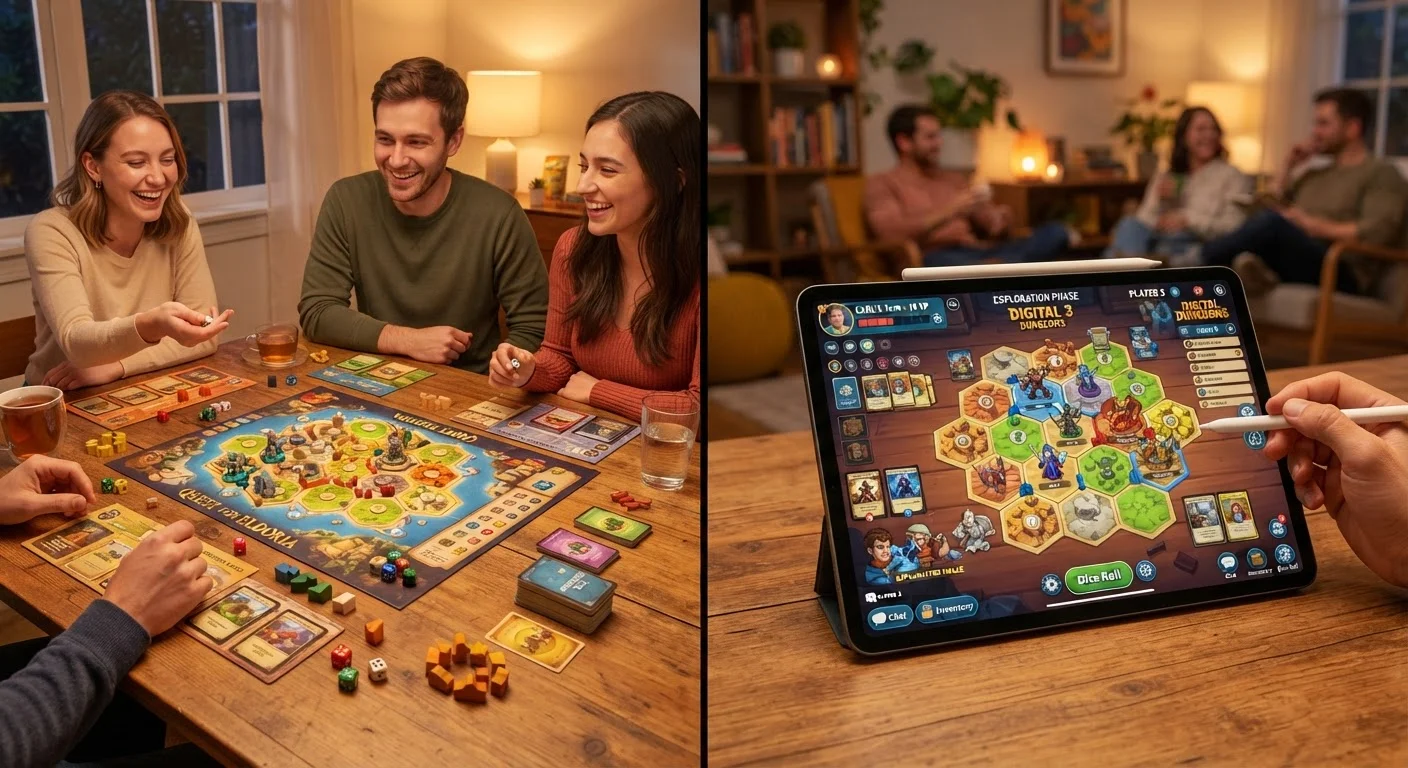
Physical games tend to excel at social skills, fine motor development, and face-to-face communication. Digital games can offer adaptive difficulty, immediate feedback, and accessibility features that physical games cannot match. Neither format is categorically better. Our comparison of digital and physical board games explores those trade-offs in detail. A thoughtful mix of both — rather than an all-or-nothing stance — tends to serve children's development best.
The heart of it: engagement drives learning. Any game that genuinely absorbs a child's attention, requires decisions, and rewards persistence is doing meaningful developmental work — label or not. And if you're just starting to build a family game collection, gateway games are a smart, low-pressure entry point for kids and adults alike.
74%
Parents who trust 'educational' labels
A survey by the Joan Ganz Cooney Center found that a large majority of parents rely heavily on 'educational' labeling when selecting children's media, despite limited regulatory oversight of the term.
2–3x
Learning boost from guided play vs. solo play
Developmental research broadly indicates children learn at substantially higher rates during adult-guided or cooperative play compared to independent, unstructured play with the same materials.