How OLED Actually Works
OLED stands for Organic Light-Emitting Diode. The key word is organic — each pixel in an OLED panel contains a thin layer of carbon-based compounds that produce light on their own when electricity passes through them. There is no separate backlight behind the screen. Every pixel is its own independent light source.
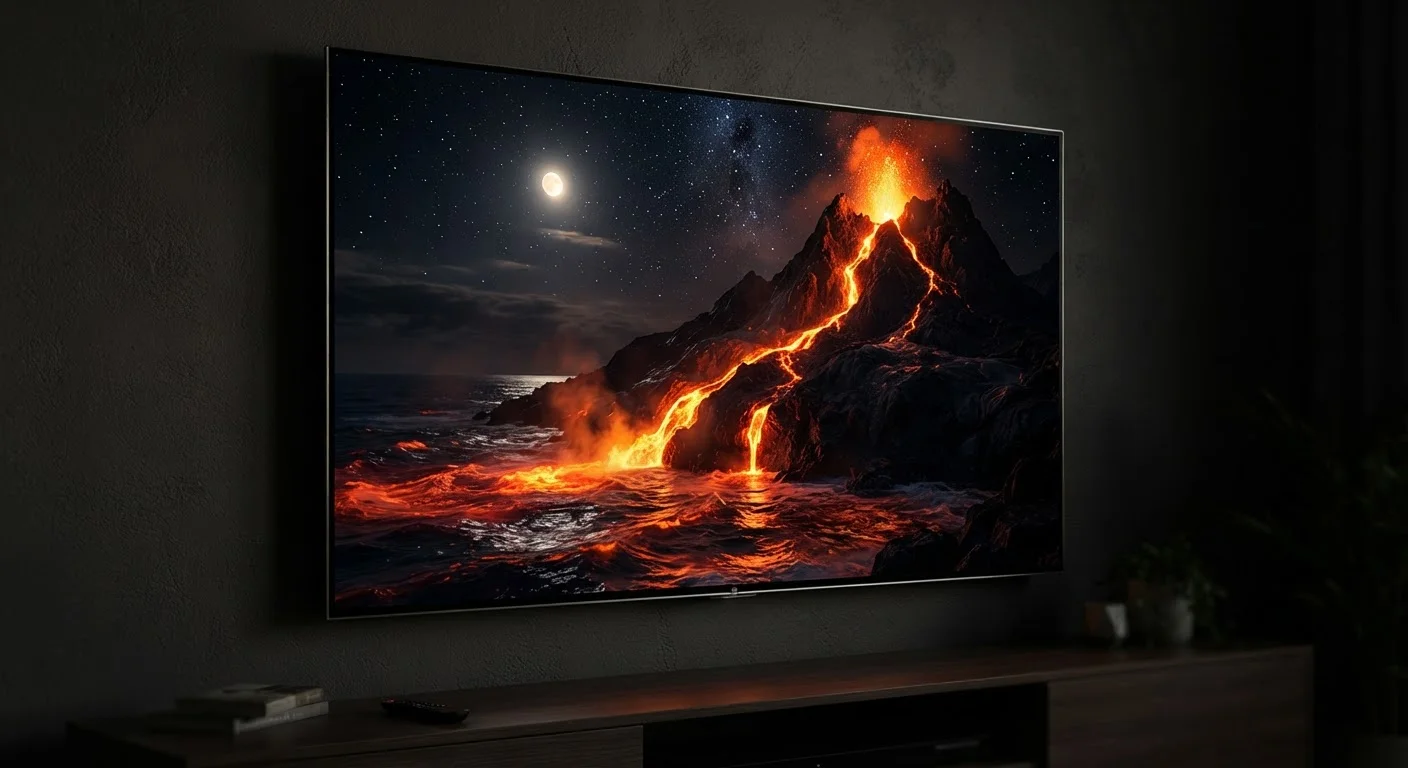
This architecture has a dramatic practical consequence: when a scene calls for black, those pixels simply turn off completely. No light is emitted, so black looks genuinely black — not a very dark shade of grey. The result is a contrast ratio that no backlit display can mathematically match, because true OLED blacks register as essentially infinite contrast against bright areas of the same frame.
OLED panels are also thinner and more flexible than LCD-based screens because they eliminate the backlight layer. That structural simplicity is part of why OLED appears in laptop display specs and premium smartphones alongside televisions. For more on how display type interacts with other picture factors, see our breakdown of what actually determines TV picture quality.
How QLED Actually Works
QLED stands for Quantum Light-Emitting Diode, though the name is slightly misleading — QLED is fundamentally still an LCD (Liquid Crystal Display) panel. What differentiates it is a layer of quantum dots: microscopic semiconductor particles, typically two to ten nanometers in diameter, that convert the backlight's blue LED light into very precise red and green wavelengths.
Because quantum dots emit highly pure, narrow-spectrum colors when energized, the panel can reproduce a wider color gamut than conventional LCD backlighting alone. The backlight itself — usually a dense array of LEDs — can also be driven to very high brightness levels, which is where QLED tends to outperform OLED in peak nit output.
The trade-off is that the backlight is always on to some degree. Even with local dimming zones (areas of LEDs that dim independently), a QLED display cannot replicate the pixel-by-pixel black control OLED achieves. Dark scenes on QLED often show a faint glow in areas that should be fully black — a phenomenon commonly called blooming or halo effect around bright objects on dark backgrounds.
| Criterion | OLED | QLED |
|---|---|---|
| Light source | Each pixel self-emits light | LED backlight through LCD layer |
| Black level | True black (pixel off) | Near-black (backlight dimming) |
| Peak brightness | Moderate to high | Very high |
| Contrast ratio | Effectively infinite | High, but backlight-limited |
| Color gamut | Wide, strong in low-light | Wide, strong at peak brightness |
| Viewing angle | Consistent off-axis | Some shift at wide angles |
| Burn-in risk | Low but possible | Not susceptible |
| Panel thickness | Very thin (no backlight layer) | Thicker (backlight required) |
Contrast, Brightness, and Color: The Real-World Differences
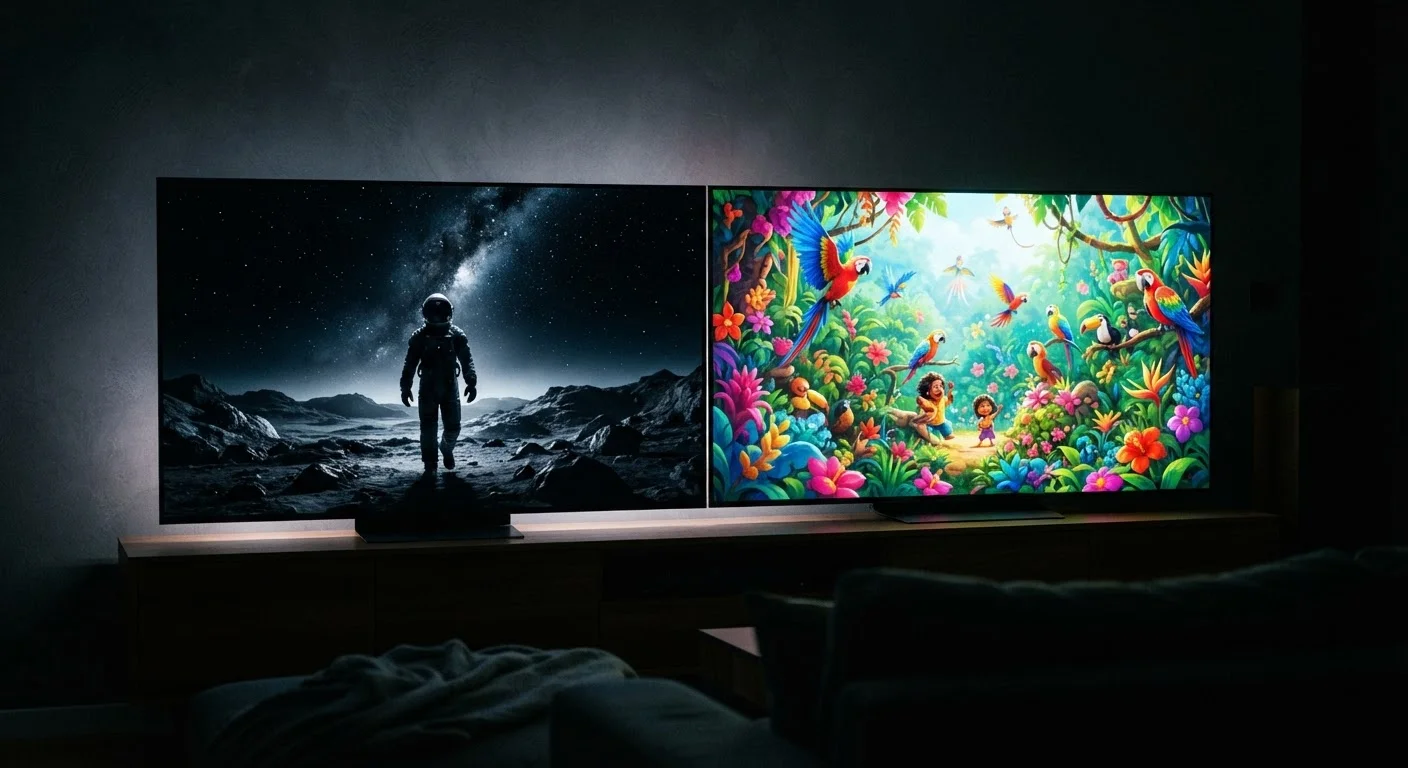
Understanding the underlying technology makes the real-world differences easier to interpret. OLED's per-pixel control gives it an advantage in contrast and shadow detail — the gradations between dark and slightly less dark are rendered with precision that matters in film noir, space scenes, or any dark-room content.
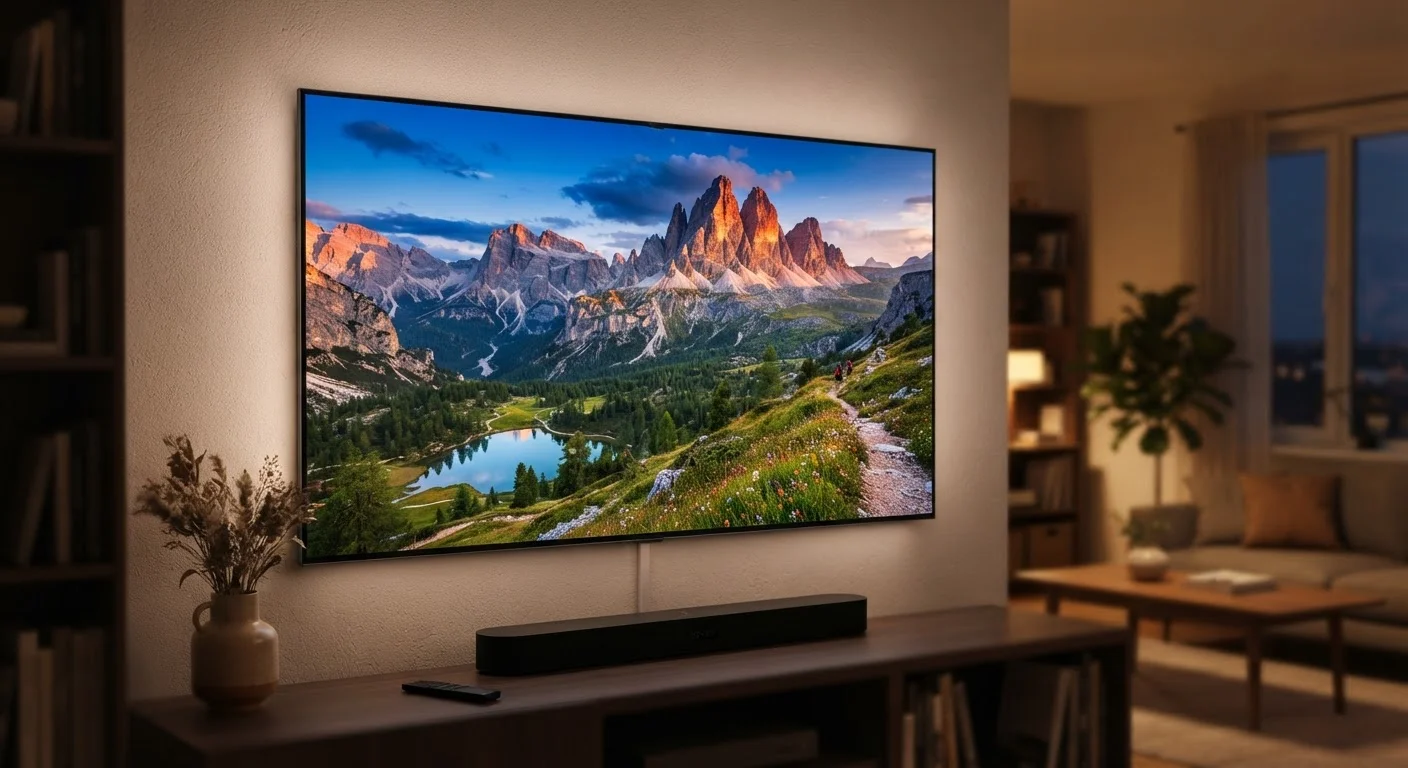
QLED's strength is sustained peak brightness. High-brightness QLED panels can maintain intense luminance across large portions of the screen without the risk of heat buildup that constrains OLED brightness in prolonged use. This makes QLED particularly well-suited for HDR content watched in bright environments. If you want to go deeper on HDR formats themselves, our guide to HDR10, Dolby Vision, and HLG explains how brightness standards interact with panel capability.
Color volume — the ability to produce saturated colors at both high and low brightness levels — is competitive between the two technologies, though each excels in different luminance ranges. OLED tends to render rich color in shadows; QLED sustains saturation at highlight levels.
~0.0005 nits
Typical OLED minimum black level
Display measurement labs have recorded OLED black levels near or at the limit of measurable luminance, compared to several nits for even premium LCD panels.
2,000+ nits
Peak brightness in high-end QLED panels
Top-tier QLED televisions have been measured exceeding 2,000 nits in small highlight windows, well above most OLED panels' sustained peak output.
~90%
DCI-P3 color gamut coverage (both technologies)
Both mature OLED and QLED panels routinely cover 90% or more of the DCI-P3 wide color gamut used in cinema and streaming HDR content.
Viewing angle is another practical differentiator. OLED panels maintain consistent color accuracy when viewed from the side, while most QLED panels exhibit some color or contrast shift at wider angles, though this varies by specific panel design. For a broader comparison of display technologies beyond televisions, our article on OLED, LCD, and AMOLED displays covers how these trade-offs play out on smaller screens.
Burn-In, Longevity, and Practical Considerations
One genuine concern with OLED is image retention, sometimes called burn-in. Because organic compounds degrade over time and can degrade unevenly if the same bright static image is displayed for extended periods, OLED panels carry a small but real risk of permanent ghosting. Manufacturers have introduced various mitigations — pixel-shift algorithms, screen savers, brightness adjustments — but the risk is not zero, especially for use cases involving persistent on-screen elements like channel logos or stock tickers.
QLED panels, being LCD-based, are not susceptible to burn-in. The liquid crystals and quantum dot layer do not degrade in the same pattern-dependent way. This makes QLED a more straightforward choice for commercial signage or any scenario where the screen displays the same layout for many hours daily.
Both technologies have matured significantly, and longevity for typical home viewing use is generally adequate for the expected lifespan of a consumer television. The burn-in question is most relevant for edge-case usage patterns rather than everyday mixed-content viewing. For those also weighing screen-based options beyond flat panels, our comparison of projectors vs. large-screen TVs addresses how light and contrast behave in projection-based alternatives.
This article provides general educational information about display technologies and is not a recommendation of any specific product or brand.